As a soldier, I worked for Lee Zeldin

His values don’t reflect what we were taught.

Posted Oct 31st, 2016

By Richard Allen Smith, Veteran, writer, advocate

As a US Army veteran, I’m troubled by the rhetoric of Donald Trump and the Republican candidates that support him, especially Rep. Lee Zeldin who I served under in the 82nd Airborne Division.

During the 14 months I served in Afghanistan from 2007 to 2008, I spent part of my time helping immigrants serving in our Army apply for their US citizenship, including immigrants from South and Central America, as well as predominantly Muslim countries. The things Donald Trump has said about these brave men and their families are simply unconscionable.

During his campaign, Trump has frequently criticized veterans and servicemembers that were not immigrants as well. He cast aspersions at prisoners of war, saying “I like people who weren’t captured” in reference to Sen. John McCain. He attacked the parents of Gold Star Army Captain Humayun Khan (see image), who heroically fell in the line of duty. And he has implied that Sergeant Bowe Begdahl should be “shot,” without a trial, an idea I find unacceptable and one that Zeldin, should condemn as well.

While he says he stands up for veterans, Trump’s actions show a deep apathy, and arguably disdain, for our service to our country. His intolerance towards other groups — Latinos, immigrants, Muslims, women, the disabled, and more — shows that he simply does not possess the values that so many of us fought to defend.

I served under Zeldin in the 82nd Airborne Division as an enlisted JAG Corps soldier. Zeldin was my officer in charge prior to deploying to Afghanistan. The Army and the 82nd Airborne Division instilled in both of us the values of inclusiveness, integrity, and respect that I keep at the forefront of my life to this day. Both Trump’s record and rhetoric, as well as Zeldin’s anti-immigrant and anti-Muslim statements, are in direct contradiction with those values.

In my time working with Zeldin, I found him to be perhaps the most unremarkable and mediocre military officer I ever served with. I was not alone in that assessment. I share this not because I revel in criticizing my fellow soldiers. In fact, it makes me deeply uncomfortable.

But what makes me more uncomfortable is when Zeldin uses his service to promote a version of patriotism that is inconsistent with every value I learned from the military, and then uses the political platform he’s been given to support fundamentally un-American things and people who threaten the very America that we swore to defend.

Mr. Trump has demonstrated that he is willing to attack veterans and their families, fan the flames of anti-immigrant and racial hatred, and mock women. Zeldin stands with him, and even calls President Obama a “racist.” I hope Zeldin will tell voters what it is about those values we learned in the Army that he has since found to be so distasteful that he must support a candidate that stands against them in every way.

Posted in Uncategorized, veterans, Zeldin | 2 Comments

The New Fascism

By Steven A. Ludsin, East Hampton, N.Y.

Letter Published in The Boston Globe

LETTERS – June 10, 2017

Politics has always been a contact sport, but the Trump administration has purposely broken rules and norms. I like to believe that a fascist party could not be elected to power, but now I reluctantly realize it could happen in America.

Respect for the Constitution could save us, but the turbulence is wrenching. Winston Churchill lamented the unteachability of mankind and the endless repetition of history. He also suggested we should act when it would be simple and effective. That time is now.

Posted in Trump, Uncategorized | Tagged , , , | 1 Comment

Interior Dept. Changes Website, Prioritizes Fossil Fuels Over Renewables

The Interior Department’s new “American Energy” webpage reflects the Trump administration’s calls for unfettered fossil fuel development.


The webpage has gone through several revamps since Ryan Zinke took over the department in March. As reported by Motherboard, the current page, last updated on May 19, stresses “removing burdensome regulations at the Department” and omits language that emphasized developing renewable energy technologies.

Additionally, the first sentence of the new page states: “The U.S. Department of the Interior is the steward and manager of America’s natural resources including oil, gas, clean coal, hydropower, and renewable energy sources.”

That’s a complete flip from the page’s February 11 iteration, then called “New Energy Frontier,” which listed clean technologies first: “solar, wind and waves, hydropower, geothermal, biofuels, oil and gas, and coal.”

The Interior Secretary seems to have a dismissive attitude towards renewables. Citing the overblown “wind kills birds” threat, Zinke said two months ago that “there’s no such thing as clean energy” as he officially lifted the Obama-era moratorium on federal coal leasing.

Earlier this month, Zinke kick-started plans to review oil and gas exploration in the Arctic and Atlantic Ocean.

“This order in effect makes Alaska open for business,” Zinke said.

Meanwhile, Zinke’s colleagues over at the Energy Department have a webpage dedicated to how renewable energy technologies can mitigate the harmful effects of climate change and that it “supports research and innovation that makes fossil energy technologies cleaner and less harmful to the people and the environment.”

The page also states that the department is “working to dramatically increase the efficiency of appliances, homes, businesses and vehicles.”

Ironically, the Energy Department’s work is being undermined by a slew of Trump policies. The president’s 2018 budget slashes funding for the Office of Energy Efficiency and Renewable Energy by a whopping 71.9 percent. Not only that, the administration has also proposed cuts on energy efficiency initiatives, from eliminating the popular Energy Star program to rolling back key vehicle emission standards.

Trump’s efforts to weaken pollution standards for vehicles is already being challenged by a coalition of 13 attorneys general and the Pennsylvania Department of Environmental Protection.

“Reducing pollution from cars and trucks is vital to New Yorkers’ and all Americans’ health and environment, as we protect the clean air we’ve worked so hard to achieve and fight climate change,” New York Attorney General Eric Schneiderman said.

“Any effort to roll back these affordable, achievable and common-sense vehicle emission standards would be both irrational and irresponsible. We stand ready to vigorously and aggressively challenge President Trump’s dangerous anti-environmental agenda in court—as we already have successfully done.”

Posted in Air Pollution, climate change, Environment, Offshore Drilling, Trump | Tagged , , , | 1 Comment

Senate GOP vows to keep plugging away at health care — behind closed doors

Salon  June 9, 2017

Mitch McConnell doesn’t want to repeal Obamacare — but he has to at least pretend that he does

Senate GOP vows to keep plugging away at health care -- behind closed doors(Credit: AP Photo/J. Scott Applewhite)


Now that President Donald Trump appears to have embraced the idea of governing as America’s first president with less than half of the public supporting him, his congressional counterparts are trying their best to appease the GOP’s conservative base by continuing their long slog to repeal and replace Obamacare.

Mitch McConnell, who leads the Republicans in the Senate, appears to have foreseen the difficulties that the party would face in passing a health care bill. In 2014, before the GOP had taken a majority in the Senate, he seemed to prefer an approach that would eliminate some of the more unpopular portions of the Affordable Care Actsuch as its tax requirement to have some form of health insurance.

McConnell’s former House Republican counterpart, retired Rep. John Boehner of Ohio, flat out stated in February that a complete repeal of Obamacare was “not going to happen” because “Republicans never, ever agree on health care.”

In March, current Speaker of the House Paul Ryan seemed to agree with that analysis, saying at a March 24 press conference after he had to withdraw the GOP’s first attempt at a health care bill, “We’re going to be living with Obamacare for the foreseeable future.”

While the GOP is having trouble agreeing on what to replace Obamacare with and the plan that ultimately did pass the House is becoming increasingly unpopular (just 17 percent of respondents supported it in a poll released Thursday by Quinnipiac University), leadership appears to have come to the conclusion that in the midterm elections that historically have been dominated by more conservative voters, taking a more discreet approach to overturning former president Barack Obama’s signature achievement will likely lead many hardcore Republicans to stay home, thus leading to GOP electoral losses.

 That’s why McConnell is still trying to push forward, albeit under a time limit, to ensure that congressional Republicans don’t allow a doomed health care effort to prevent them from passing other major pieces of legislation, such as a large tax cut. The Senate GOP is also conducting its internal negotiations in secret, planning to bring forth whatever bill that emerges direct to the Senate floor rather than to a committee.

The overall objective appears to be to produce a bill that can pass or to simply give up and move on to something else, perhaps even the more discrete measures that McConnell had talked up earlier. That’s something Sen. Claire McCaskill pointed out during a hearing on a different measure Thursday.

The Republican effort is also hampered by the fact that under reconciliation rules, the Senate GOP’s bill must save at least $119 billion from the federal budget, the savings that were achieved under the House-passed American Health Care Act.

That objective presents a significant challenge for the Senate GOP since the bill’s eventual end to Obamacare’s Medicaid expansion has become one of its most unpopular provisions. According to the Congressional Budget Office, the provision would cause up to 14 million people to lose health coverage once it goes into full effect.

The only way the Senate Republicans could keep the expansion while saving the same amount of money would be to refrain from repealing some of the tax increases that were also in the original Affordable Care Act. Signing off on those tax hikes would be strongly disapproved of by the anti-tax activists and donors who dominate the right side of the aisle in Washington. The House bill also has a provision that effectively defunds family and abortion services provider Planned Parenthood which may also run afoul of budget reconciliation rules.

Whatever ends up happening, McConnell has vowed that he will bring things to a conclusion before the Senate goes into its July 4 recess. That means the GOP is going to have to get something to the Congressional Budget Office for an official scoring as soon as possible. The Senate is also up against a hard June 21 deadline for insurance companies to decide if they are going to participate next year in the health care exchange markets that were created under Obamacare. Those decisions will almost certainly key off of what the GOP intends to do on health care. And as of now, there is no indication what that is.

As McConnell’s self-imposed deadline looms, the early declarations from Republican senators that their chamber’s bill would be a completely different thing are starting to ring false. On Monday, White House Legislative Affairs Director Marc Short told reporters that “at the end of the day, you will probably see a lot of similarities” to the House version of the bill.

Posted in ACA, AHCA, American Health Care Act, Health Care, Medicaid, trumpcare | Comments Off on Senate GOP vows to keep plugging away at health care — behind closed doors

The Brownback Tax Cut Experiment Ends in Kansas

Logo Site

June 7, 2017

Just as President Trump is ramping up his push for a major tax cut that he believes will pay for itself through faster economic growth, the Kansas template for that approach has crashed and burned. After four years of below-average growth, deepening budget deficits, and steep spending reductions, the GOP-dominated Kansas legislature has repealed many of the tax cuts at the heart of Governor Sam Brownback fiscal agenda.

It is a lesson unlikely to be missed by congressional Republicans—or Democrats.

Brownback vetoed the legislature’s first attempt  to reverse his tax cuts, but two-thirds majorities in both the House and Senate overrode his veto. The measure would boost state taxes by $1.2 billion over two years, in part by raising the top income tax rate from 4.6 percent to 5.7 percent and by once again taxing sole proprietorships, partnerships, and other pass-through businesses. Pressured by Brownback, the legislature had made pass-throughs tax free.

In a worrisome echo of that plan, the Trump Administration says it will propose cutting the federal individual income tax rate on pass-throughs to 15 percent , far below the top current rate on wages of 39.6 percent or Trump’s preferred rate of 35 percent.

Since Kansas enacted tax and spending cuts in 2012 and 2013, Brownback and his allies have argued that this fiscal potion would generate an explosion of economic growth. It didn’t. Overall growth and job creation in Kansas underperformed both the national economy and neighboring states. From January, 2014 (after both tax cuts passed) to April, 2017, Kansas gained only 28,000 net new non-farm jobs. By contrast, Nebraska, an economically similar state with a much smaller labor force, saw a net increase of 35,000 jobs.

While overall employment barely increased and economic activity was lower than other states, Kansas saw a significant increase in the number of individuals with business income.  The likely reason: That zero tax rate on pass-throughs.

The tax cuts did produce one explosion, however. The state’s budget deficit was expected to hit $280 million this year, despite major spending reductions. Kansas falls well below national averages in a wide range of public services from K-12 education to housing to police and fire protection, according to an analysis by the Urban Institute’s State and Local Finance Initiative. Under order from the state Supreme Court, the legislature has voted to increase funding for public schools by $293 million over the next two years.

The more troubling lesson for Republicans in Congress: While Brownback was reelected in 2014, his popularity has since plummeted and his approval rating now hovers at around 25 percent, second lowest among all sitting governors. And while the GOP enjoyed tremendous national electoral success in 2016, the party lost seats in the Kansas legislature. At least in one deep red state, the Trump formula of big tax and spending cuts is no longer the path to political success.

In 2012, Brownback called his tax plan a “real live experiment.” It appears to have failed.

Posts and Comments are solely the opinion of the author and not that of the Tax Policy Center, Urban Institute, or Brookings Institution.

Posted in budget, economy, Employment, Tax Reform, Trump | 1 Comment

When the Nazis Come Marching In

Posted in Slate — JURISPRUDENCE, June 7, 2017

I never feared the First Amendment until white supremacists came to my hometown.

As a resident of Charlottesville, Virginia, I have been forced of late to spend too much time thinking about Nazis. In mid-May, a handful of white supremacists, Holocaust deniers, xenophobes, and recreational racists—among them Richard Spencer—marched through one of our parks with flaming torches in support of a Robert E. Lee statue that has been slated to be sold by the City Council. The demonstration grabbed headlines worldwide, the statue’s removal has been placed on a six-month hold by a judge, and the Ku Klux Klan is now seeking permission to march here in July. A few weeks after the first march, a Facebook post from a local black farmer went viral due to its suggestion that the arrival of the white supremacists was more a culmination than an inciting incident, and that the fight over the Lee monument was empty symbolism that distracted from a meaningful discussion about the systemic racism that already exists here. The post included the claim that “it isn’t Richard Spencer calling the cops on me for farming while Black. It’s nervous White women in yoga pants with ‘I’m with Her’ and ‘Coexist’ stickers on their German SUVs.” White women in yoga pants were upset. Alt-right websites rejoiced.

Maybe it was time for me and the First Amendment to see other people.

My little city in central Virginia has become the stuff of reality TV. The local police, who didn’t see the Lee Park thing coming, are dialed up to 11. And with threats, incitement, and actual assaults perpetrated both by alt-right sympathizers and the protesters who oppose them, their job is no longer to stand back but to surge in almost as soon as the shouting begins. Now, when we come to meet in our town square, we are uncertain of whether we are suiting up for events that fete the Constitution or violent altercations for which we should park with an eye to high-speed retreats. Lee Park itself, where my babies learned to walk, has become ground zero for people expecting the worst.

This is how I felt as I headed to a local counter-protest the morning of May 31: afraid for the first time in my 16-year residence in a town I love. I was afraid that the cycle of arrests and assaults that have followed the Richard Spencer march would lead to more arrests and assaults, afraid about where we parked the car because white supremacists in this town have followed protesters home from rallies, afraid for the first time in the small town where my kids walk everywhere alone. For the first time in a lifetime of journalism, I was also afraid to wear my press credentials because today, in this town, they might invite punching.

Last week, I had come to a place where I was thinking—if not saying aloud—that maybe it was time for me and the First Amendment to see other people. It’s not me, to be sure, it’s the First Amendment—or at least what’s become of it. I am weary of hate speech, wary of threats, and tired of the choice between punching back and acquiescing. I am sick to death of Nazis. And yet they had arrived, basically on my doorstep.

For the Framers, the thinking went, free speech was just speech, nothing more and nothing less. The best way to deal with the most appalling speakers would be to ignore them, in the hope that they would go away or drown trying to be heard. That they wouldn’t survive the marketplace of ideas. It’s the same reason we tried to ignore Donald Trump for so long or at least failed to take him seriously. Or so I wrote in 2015. We tried to ignore Steve Bannon and Milo Yiannopoulos. We tried to ignore Ann Coulter and Richard Spencer. We ignored them for so long and for so hard that they now get to ignore us. And these days, people who used to feel free to shout and threaten are emboldened to punch, body-slam, and stab.

It is a short hop, we are learning, from “words can never hurt us” to actual sticks and stones and the attendant breaking of bones.

These days, people who used to feel free to shout and threaten are emboldened to punch, body-slam, and stab.
That is what has become of free speech in this country. That is why I was contemplating breaking up with it. I don’t think I’m alone, either. There are a lot of people out there who feel that they ignored racist, xenophobic, sexist white supremacists at their own peril, for months and years, when they should have been punching back. And now, a lot of people in my town are not quite sure what to do. Some liberals cheered when Richard Spencer was confronted at his gym and cheered again when Ann Coulter didn’t speak in the free speech haven of Berkeley, California. Some have decided to meet what they perceive as violence with violence of their own: A growing list of “anti-fascist” groups have announced they are willing to use “direct action” against their foes if necessary. Many progressives are sick and tired because they have found that their attempts to protect free speech have resulted in a world that is not flush with the reciprocal exchange of ideas, but one that is shimmering with the threat of imminent violence and the daily fear that comes when you live with the possibility of that violence.

Cities that never worried about much beyond trampled flora at their Memorial Day parades now need to prepare for protests as if they are riots in the making, at tremendous cost to our collective psyche. Consider the choices available to the mayor of Portland, Oregon, after two men, Taliesin Myrddin Namkai-Meche and Ricky John Best, were stabbed to death as they tried to stop a white supremacist from harassing two young women on the light rail. Portland is in a state with robust constitutional speech protections. It has also suffered a long and frightening string of racial incidents in recent months. The white supremacist who killed two men in May had attended “free speech” rallies. And now at similar rallies everywhere, including my hometown, protesters on both sides are prepared for violence. Violence, these days, is almost expected. The only question seems to be whether cities will try to prevent bloodshed before it can happen. It’s why, immediately following the stabbings, that Portland Mayor Ted Wheeler tried to revoke permits for future alt-right protests altogether.

Of course, per the U.S. Constitution, Wheeler could not revoke these permits and stop these events regardless of how good his intentions were. And they were good: “My main concern is that they are coming to peddle a message of hatred and of bigotry,” he had told reporters. “They have a First Amendment right to speak, but my pushback on that is that hate speech is not protected by the First Amendment to the United States Constitution.” Unfortunately, he is wrong as a matter of fact and of First Amendment doctrine because if Nazis get to march in Skokie, Illinois, racists can march in Portland. (The ACLU of Oregon quickly reminded him of this on Twitter, pointing out that “The government cannot revoke or deny a permit based on the viewpoint of the demonstrators. Period.”) Soon, Mayor Wheeler’s office was walking back the claim that he was calling to suppress speech, saying he was simply trying to avoid physical violence. As an attorney friend in Portland reminded me, this is exactly why elected officials have attorneys, so they can say, “I wanted to cancel the rallies, but my lawyers wouldn’t let me.”

Is the First Amendment allowing us to batter and attack one another in ways that are more pernicious than the act of silencing speech?

The conundrum facing Wheeler, though, is the conundrum facing us all. It’s the same one that has been plaguing me: Is the First Amendment allowing us to batter and attack one another in ways that are more pernicious than the act of silencing speech? Why is my city, roiled and bruised by the events of May, still allowing the KKK to march here next month?

So far in Charlottesville, we have kept violence at bay. But that fact has not felt like a promise. Last Wednesday morning, some of the white nationalists announced plans to gather again. The police showed up in full force, as did counter-protesters organized by local faith groups. Actually, the counter-protesters outnumbered the alleged white supremacists by about 30 to 1. Everyone I spoke to was anxious. That, not politics, was hanging in the air. The faith groups were trying to guess at who would pull a knife; the young man who had been hassled by the Richard Spencer crowd back in May for wearing a yarmulke was back, again in his yarmulke. Nobody knew which guy might be the guy—the one with the knife, or even the gun.

The scene wasn’t as clear-cut as you might think a confrontation between white supremacists and anti-white supremacists would be. A local candidate for city council, Kenneth Jackson, was off to the side trying to talk. He was there with the support of Jason Kessler, one of about four white supremacists in attendance. Both wanted the Robert E. Lee statue to remain standing. Jackson is black and gay. Kessler made headlines last week after he “covered” the torch-march for the Daily Caller; his piece declined to mention that in addition to attending, he’d been a speaker celebrating Holocaust denialism and white superiority. His article still stands, a valoric love song to white supremacy, now with an editor’s note appended that reads “The author notified The Daily Caller after publication that he spoke at a luncheon May 14 on behalf of an effort to preserve the monument.” After spending the subsequent weeks being harassed everywhere he went, he was back in the park. He carried a megaphone he did not use.

It is ever more clear to me that the free press—which exists, to make an obvious point, because of the First Amendment—is the enemy of the white supremacists who keep talking about free speech. Kessler blames the press for everything, including his now-terminated contract with the Daily Caller. But even Jackson posted a Facebook rant about a news account of last Wednesday’s protest that he felt mischaracterized the event. When the revolution comes, it will be because someone who felt he had important things to say felt wronged by the media.

While the religious groups sang songs and prayed at the foot of the monument, Kessler held forth about Jewish nepotism and the “white guilt” that infected the faith leaders leading the counter-protest. Jackson, who has taken the public position that he wants to preserve the Lee statue, lectured Kessler about racism and homophobia, then turned on the people of faith for caring less about the lived experiences of the black citizens of Charlottesville than they do about symbols like the Lee statue. “When Dr. King came here,” said Jackson, according to an account in a local paper, “he talked about peace and unity. He didn’t try to make white people feel guilty about the past.” He advised local civil rights activists to spend their time working on issues like affordable housing rather than showing up to protests. When a spontaneous prayer circle erupted, the Lee supporters held hands. Kessler opted out of hand-holding.

When the revolution comes, it will be because someone who felt he had important things to say felt wronged by the media.

At this point, activist Veronica Fitzhugh approached Kessler and Jackson with a Bible in her hand. She had been one of the people shouting at Kessler to “fucking go home” as he ate at a restaurant on the downtown mall—indeed, she was later arrested for it and charged with assault and disorderly conduct. Now she hugged Jackson, and hugged some of the Lee supporters, and said she was asking for forgiveness. Kessler was not hugging, either.

The protests ended, in the shadow of the still-standing Robert E. Lee, with Fitzhugh and Jackson engaged in an ontological debate about the constitutional scope of protected free speech. Jackson felt that screaming at Nazis in public was illegal, but Fitzhugh thought it was protected. Local police officials declined to weigh in, at least then. When Jackson and Fitzhugh called it a draw and everyone stood down, the police were dispatched to the holy work of illegal left turns. As we departed Lee Park, Kessler sat on a park bench alone, checking his phone.

The news cameras, the cellphones, and the voice recorders reported that nothing violent transpired during the sequel to the flaming torch march that tore Charlottesville apart. That was true. But last Wednesday was about more than the absence of bloodshed. A black man, running for City Council on a pro–Robert E. Lee statue platform, tried to explain to a black woman who will never, ever give an inch for a Nazi, that symbols are just symbols in the middle of a city that is tearing itself to bits over, well, symbols. What the fear and the calls for banning marches misses—what I doubted before I went to see it for myself—is that an actual conversation about speech, race, fury, and pain, happened in a city park.

I can’t help but feel, in some way, that we got away with something last Wednesday. If we did, we may not be as lucky next time.

But to guarantee an escape from conflict, from violence, requires censorship. To have free speech in this moment, when the stakes are so high, is to live with fear. This is not an easy thing to confront—or to accept. If everyone had just stayed home last Wednesday in Charlottesville, there would have been no need to be afraid. There would also have been no dialogue.

What I saw on Wednesday reaffirmed my conviction that conversation might still be our best chance of getting out of this mess. Free speech is just free speech. It takes actual humans making the effort to talk to each other to transform speech into something more vital and more valuable. Conversations don’t always work. They may sometimes go wrong—horribly, terribly wrong. But I know someone who left that park with the phone number of someone from the “opposing” side. I saw people who showed up nervous, but showed up anyhow. The First Amendment will never be able to protect us from horrible words and horrific acts. It does guarantee that we’ll keep talking.

Posted in first amendment, Uncategorized | Tagged , , , , | Comments Off on When the Nazis Come Marching In

The Potemkin Policies of Donald Trump

Published in The Atlantic

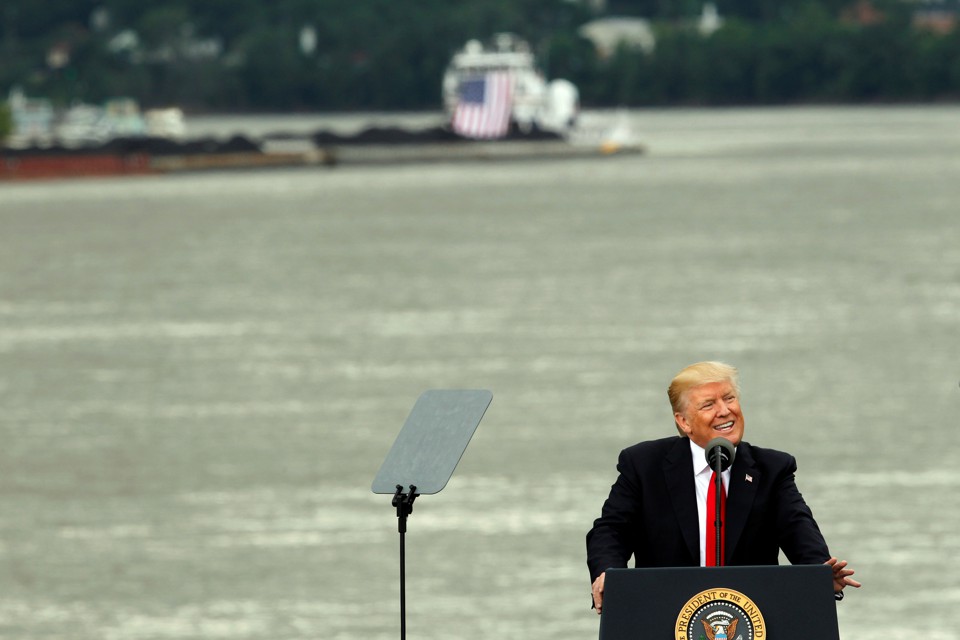
The simplest summary of White House economic policy to date is four words long: There is no policy.

John Sommers II / Reuters
TEXT SIZE

It’s “Infrastructure Week” at the White House. Theoretically.

On Monday, the administration announced a plan to spend $200 billion on infrastructure and overhaul U.S. air traffic control. There was a high-profile signing in the East Wing before dozens of cheering lawmakers and industry titans. It was supposed to be the beginning of a weeklong push to fix America’s roads, bridges, and airports.

But in the next two days, Trump spent more energy burning metaphorical bridges than trying to build literal ones. He could have stayed on message for several hours, gathered Democrats and Republicans to discuss a bipartisan agreement, and announced a timeframe. Instead he quickly turned his attention to Twitter to accuse media companies of “Fake News” while undermining an alliance with Qatar based on what may be, fittingly, a fake news story.

It’s a microcosm of this administration’s approach to public policy. A high-profile announcement, coupled with an ambitious promise, subsumed by an unrelated, self-inflicted public-relations crisis, followed by … nothing.

The secret of the Trump infrastructure plan is: There is no infrastructure plan. Just like there is no White House tax plan. Just like there was no White House health care plan. More than 120 days into Trump’s term in a unified Republican government, Trump’s policy accomplishments have been more in the subtraction category (e.g., stripping away environmental regulations) than addition. The president has signed no major legislation and left significant portions of federal agencies unstaffed, as U.S. courts have blocked what would be his most significant policy achievement, the legally dubious immigration ban.

The simplest summary of White House economic policy to date is four words long: There is no policy.

Consider the purported focus of this week. An infrastructure plan ought to include actual proposals, like revenue-and-spending details and timetables. The Trump infrastructure plan has little of that. Even the president’s speech on Monday was devoid of specifics. (An actual line was: “We have studied numerous countries, one in particular, they have a very, very good system; ours is going to top it by a lot.”) The ceremonial signing on Monday was pure theater. The president, flanked by politicians and businesspeople smiling before the twinkling of camera flashes, signed a paper that merely asks Congress to work on a bill. An assistant could have done that via email. Meanwhile, Congress isn’t working on infrastructure at all, according to Politico, and Republicans have shown no interest in a $200 billion spending bill.

In short, this “plan” is not a plan, so much as a Potemkin policy, a presentation devised to show the press and the public that the president has an economic agenda. The show continued on Wednesday, as the president delivered an infrastructure speech in Cincinnati that criticized Obamacare, hailed his Middle East trip, and offered no new details on how his plan would work. Infrastructure Week is a series of scheduled performances to make it look as if the president is hard at work on a domestic agenda that cannot move forward because it does not exist.

Journalists are beginning to catch on. The administration’s policy drought has so far been obscured by a formulaic bait-and-switch strategy one could call the Two-Week Two-Step. Bloomberg has compiled several examples of the president promising major proposals or decisions on everything from climate-change policy to infrastructure “in two weeks.” He has missed the fortnight deadline almost every time.

The starkest false promise has been taxes. “We’re going to be announcing something I would say over the next two or three weeks,” Trump said of tax reform in early February. Eleven weeks later, in late April, the White House finally released a tax proposal. It was hardly one page long.

Arriving nine weeks late, the document was so vague that tax analysts marveledthat they couldn’t even say how it would work. Even its authors are confused: Treasury Secretary Steven Mnuchin has repeatedly declined to say whether the plan will cut taxes on the rich, even though cutting taxes on the rich is ostensibly the centerpiece. Perhaps it’s because he needs more help: None of the key positions for making domestic tax policy have been filled. There is no assistant secretary for tax policy, nor deputy assistant secretary for tax analysis, according to the Treasury Department.

Once again, the simplest summary of White House tax policy is: There is no plan. There isn’t even a complete staff to compose one.

The story is slightly different for the White House budget, but no more favorable. The budget suffers, not from a lack of details, but from a failure of numeracy that speaks to the administration’s indifference toward serious public policy. The authors double-counted a projected benefit from higher GDP growth, leading to $2 trillion math error, perhaps the largest ever in a White House proposal. The plan included hundreds of billions of dollars in revenue from the estate tax, which appears to be another mistake, since the White House has separately proposed eliminating it.

Does the president’s budget represent what the president’s policies will be? It should, after all. But asked this very question, Mick Mulvaney, the director of the Office of Management and Budget, made perhaps the strangest claim of all: “I wouldn’t take what’s in the budget as indicative of what our proposals are,” he said.

This haphazard approach extends to the repeal of Obamacare, which may yet pass the Senate, but with little help or guidance from the president. Trump has allowed House Speaker Paul Ryan to steer the Obamacare-replacement bill, even though it violates the president’s campaign promises to expand coverage and protect Medicaid. After its surprising passage in the House, he directly undercut it on Twitter by suggesting he wants to raise federal health spending. Even on the most basic question of health-care policy—should spending go up, or down?—the president’s Twitter account and his favored law are irreconcilable. A law cannot raise and slash health care funding at the same time. The Trump health care plan does not exist.

It would be a mistake to call this a policy-free presidency. Trump has signed several executive orders undoing Obama-era regulations, removing environmental protections, and banning travel from several Muslim-majority countries. He has challenged NATO and pulled out of the Paris Accords. But these accomplishments all have one thing in common: Trump was able to do them alone. Signing executive orders and making a speech don’t require the participation of anybody in government except for the president.

It’s no surprise that a former chief executive of a private company would be more familiar with the presumption of omnipotence than the reality of divided powers. As the head of his own organization, Trump could make unilateral orders that subordinates would have to follow. But passing a law requires tireless persuasion and the cooperation of hundreds of representatives in the House and Senate who cannot be fired for insubordination. Being the president of the United States is nothing like being a CEO, especially not one of an eponymous family company.

Republicans in the House and Senate don’t need the president’s permission to write laws, either. Still, they too have struggled to get anything done. Several GOP senators say they may not repeal Obamacare this year—or ever. It is as if, after seven years of protesting Obamacare, the party lost the muscle memory to publicly defend and enact legislation.

In this respect, Trump and his party are alike—united in their antagonism toward Obama-era policies and united in their inability to articulate what should come next. Republicans are trapped by campaign promises that they cannot fulfill. The White House is trapped inside of the president’s perpetual campaign, a cavalcade of economic promises divorced from any effort to detail, advocate, or enact major economic legislation. With an administration that uses public policy as little more than a photo op, get ready for many sequels to this summer’s Infrastructure Week.

Posted in economy, Employment, Environment, Tax Reform, Trump | Tagged , , | 1 Comment

Is This the End of Free Birth Control?

Published in The Atlantic

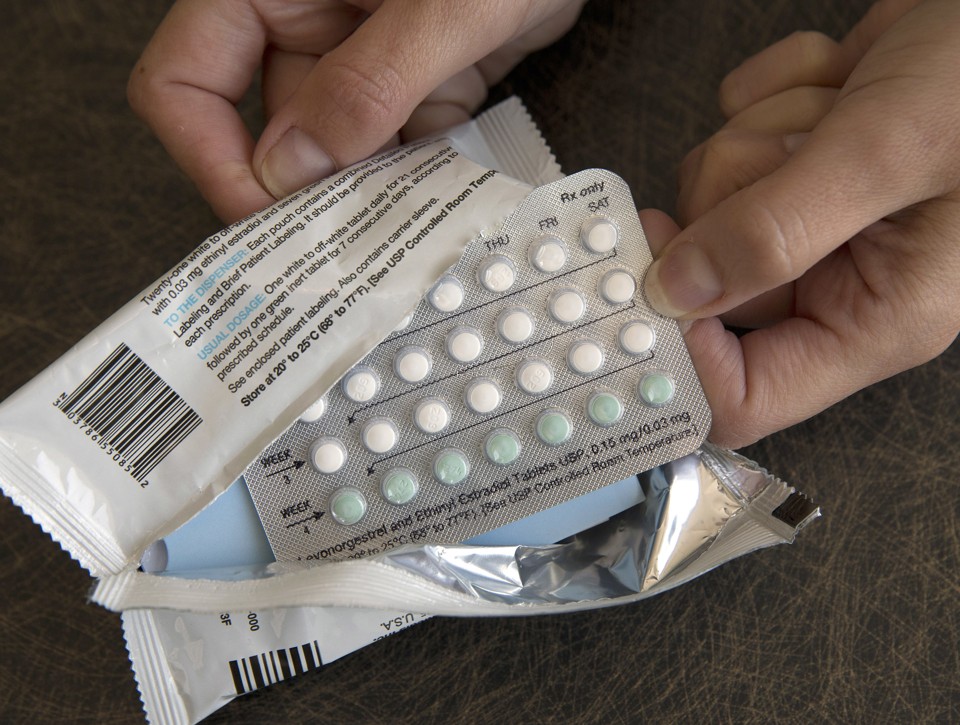
A draft rule suggests the Trump administration will let most companies stop covering birth control. Will they?

Rich Pedroncelli / AP
TEXT SIZE
According to a draft regulation leaked to Vox this week, all of the IUD preppersmight have been onto something. After the election, liberal women took to the internet in droves to warn each other to get the long-acting contraceptive devices, free under Obamacare but pricey otherwise, implanted while they still could. If the draft federal rule is implemented, that option could be going away for some women soon: Their employers would soon be allowed to stop covering birth control entirely.

The Affordable Care Act made it so that all contraceptive methods had to be covered without a copay by all employers except houses of worship. After a series of court cases and rule changes under the Obama administration, some other religious institutions and “closely held” companies—such as the crafts retailer Hobby Lobby—were also exempted. They could file some paperwork with the federal government, and a third-party company would then directly cover birth control for their employees, without any involvement from the religious employer.

But some religious organizations, such as the Little Sisters of the Poor, say that even filling out that paperwork is a step too far. It makes them complicit in providing birth control, they argue, an infringement on their beliefs.

The new draft rule would change that, granting not just religious groups like the Little Sisters but all types of employers an exemption from the birth-control mandate. And the companies would not have to find some other way to provide the coverage, like through a third party. “That would leave women with no option,” says Andrea Flynn, a fellow at the Roosevelt Institute who focuses on reproductive policy.

The Trump administration hasn’t confirmed the legitimacy of the leaked draft. But The New York Times separately reported this week that the administration was considering rolling back the rule.

Under the new rule, if implemented as-is, religiously affiliated universities, tiny start-ups, and even publicly traded companies could claim to have a moral issue with birth control and simply change their benefits to stop covering it. This might be less of a blow for women who take relatively inexpensive, generic birth-control pills, but those seeking IUDs—which typically run in the hundreds of dollars—would definitely feel the impact. Just in the first few years after the Obamacare birth-control mandate was implemented, women saved more than a billion dollars on out-of-pocket contraceptive costs.

The new rule doesn’t apply to women on Medicaid, though that program will face cuts if the House Obamacare replacement bill passes, which would potentially affect birth-control access. And that same bill, the American Health Care Act, would allow states to change the “essential health benefits” they cover, so women who buy insurance on the individual market might lose access to free birth control in that way.

Conceivably, women could seek publicly funded sources of birth control, but the administration and Congress are currently attempting to slice away funding for Planned Parenthood, a major source of family-planning services.

The larger question about this rule, specifically, is: Will companies stop covering birth control?

Before the Affordable Care Act, 28 states required insurance plans to cover contraceptives, and 85 percent of large firms—whose plans don’t tend to be regulated by states—covered prescription contraceptives. However, many of those plans still required women to pay copays and deductibles.

At least 122 companies are currently suing the federal government over the requirement to provide birth control, so at least that many might leap at the opportunity to stop covering it. In 2014, Mother Jones profiled some of these groups, which include a military contractor that stamps Bible verses on its rifles and a car dealership owned by a born-again Christian. And though they are less vocal about the birth-control mandate, many big companies, including Tyson Foods and Chick-fil-A, have religious roots or founders.

According to the National Women’s Law Center’s Gretchen Borchelt, if you include nonprofits that have objected to the mandate, “tens of thousands of women” will be affected. About 10 percent of large nonprofits—those with more than 1,000 workers—have applied for the Obama-era exemption to the mandate, according to the Kaiser Family Foundation’s Alina Salganicoff. But only some of them have sued, saying they would have a moral issue with it, so it’s not clear that they would opt to cut off their employees from a basic preventive health resource entirely.

One hope for women might be that after companies start providing a benefit, “you let the toothpaste out of the tube,” as Chatrane Birbal, a senior advisor of government relations at the Society for Human Resource Management, put it to me. Employees get used to perks, and if you snatch them away, they might find other jobs. That would be especially true of companies that have a more tenuous moral case against birth control, or whose employees don’t subscribe to the same strict religious code that the proprietors do.

What’s more, for employers, it’s less expensive if employees avoid having babies than if they have lots of them by accident. “There are consequences to not providing access to contraception: childbirth, abortion, and indirect costs, such as more employee absenteeism and maternity leave,” Birbal said.

And there may come another check on corporate whims: The outrage of half the workforce. “Employers are going to be hesitant to pick benefits that will help one gender over another,” Birbal said. “That’s an HR nightmare that would reduce morale.”

Posted in AHCA, American Health Care Act, Birth Control, Congress, Family Issues, Family Planning, Health Care, Medicaid, Religion & tolerance, Trump, trumpcare | Comments Off on Is This the End of Free Birth Control?

Schizophrenia in the East Hampton GOP

Published in The East End Beacon, June 8, 2017

To the Editor:


Reg Cornelia’s recent outbursts lay bare the schizophrenia afflicting the East Hampton GOP. Most recently, on behalf of the EH GOP, he viciously and misleadingly denounced the Deepwater wind farm proposed for erection in the Atlantic. Regardless of the merits of that proposal and to no one’s surprise, Mr. Cornelia’s diatribe hewed to the GOP orthodoxy that rejects any and all energy proposals offering alternatives to the consumption of fossil fuels. In so doing, the Party (and its East Hampton cohort) baldly pays fealty to the oil and gas interests that call the shots, and line their pockets.


Mr. Cornelia would have us believe that the use of natural gas as an energy source is cleaner than wind generation. Nothing could be further from the truth. Methane, which makes up 92 percent of natural gas, is a significantly potent greenhouse gas. It is 84 times more powerful than carbon dioxide. Natural gas also contains chemicals that can harm human health, such as hydrogen sulfide, toluene, xylene, benzene and formaldehyde. These toxic air pollutants increase the chance of cancer, respiratory, neurological, reproductive, developmental and other serious health problems. Small concerns to the EH GOP when compared to the importance of being a sycophant to the oil and gas industries, undoubtedly in search of campaign dollars.


The EH GOP has candidly promised to deliver the same “progress” as its Washington cronies, Mr. Trump and the House GOP. There is no pro-environmental agenda to be found anywhere in the Trump agenda. And there is none to be found among the screeds posted on the EH GOP’s Facebook page.


So, while the EH GOP candidates for the Town Board candidates try to talk the environmental talk, their Party sponsors are preaching the exact opposite. Who are voters to believe? None of them. The Democratic slate has an already proven track record so voters need leave nothing to chance this November.


Sincerely,


Bruce Colbath

Posted in East Hampton, Environment, GOP, Offshore Drilling, Paris Climate Accord, Town Board | 1 Comment

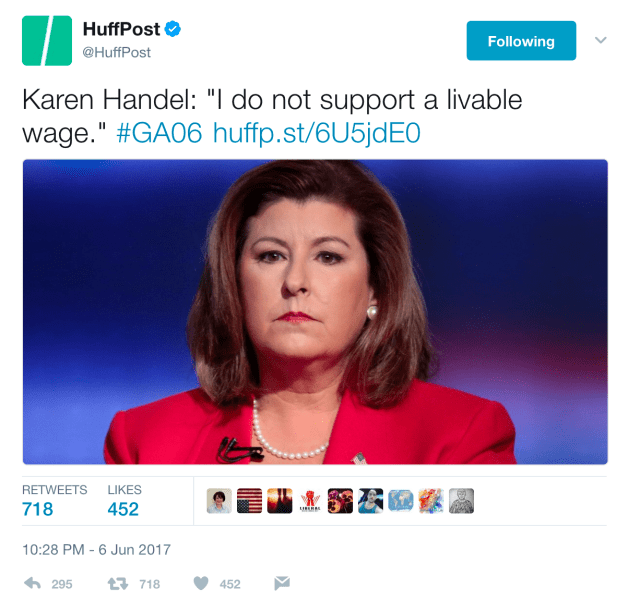
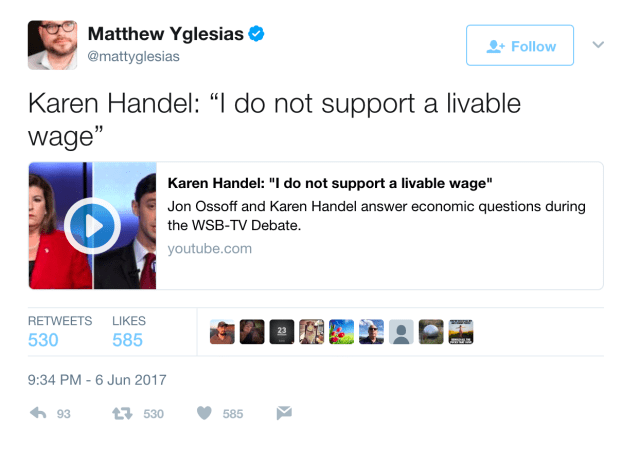
I Do Not Support a Livable Wage!

This is a quote from Karen Handel (running for congress against Jon Ossoff).  The quote has gone viral on Twitter:  https://twitter.com/HuffPost/status/872279182545494017

http://talkingpointsmemo.com/livewire/karen-handel-i-dont-support-livable-wage

Screen Shot 2017-06-08 at 12.58.11 PM.png

Screen Shot 2017-06-08 at 12.58.57 PM

Nice review of the context by George Lakoff on this blog post.

Posted in GOP, jobs, Uncategorized, Zeldin | Tagged , , , , | Comments Off on I Do Not Support a Livable Wage!