This Brought a Big Smile to my Face

By Bob Brody:

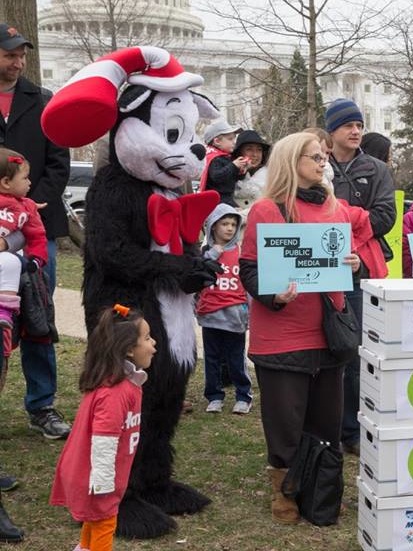
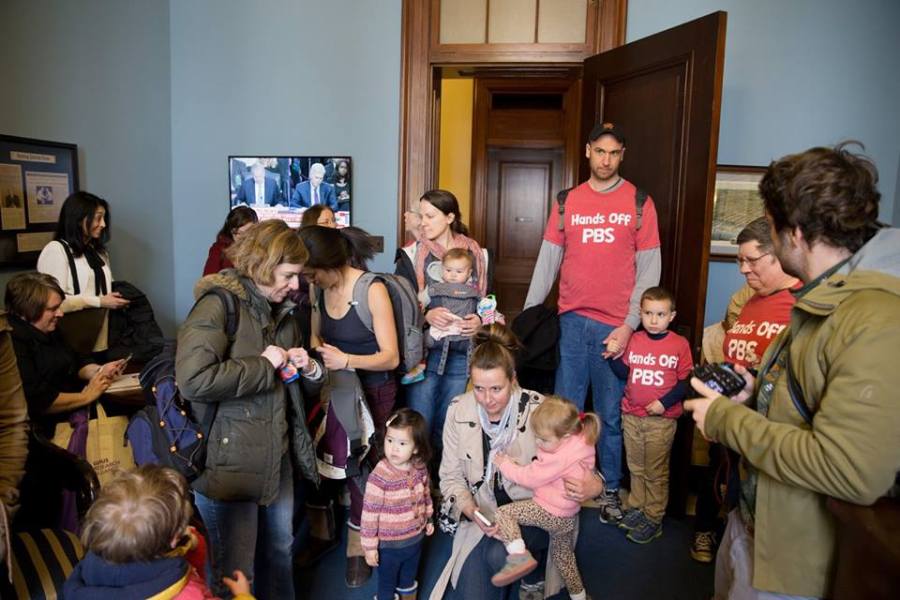
This brought a big smile to my face: A petition I was so happy to sign. Click on this link to see the pictures.

As per http://parentstogetheraction.org

“We Delivered 600,000 Save PBS Kids Petitions to Congress On Tuesday, we delivered your Save PBS Kids petition—with 660,000 signatures!—to the Senate, accompanied by kids, parents, and The Cat in the Hat. It made quite a splash!”

Defend PBS!

defend pbs

Posted in Education, Uncategorized | Tagged , , , , , , | Comments Off on This Brought a Big Smile to my Face

17361851_10154249005795493_1637825435470878762_n

Posted in Uncategorized | Comments Off on 17361851_10154249005795493_1637825435470878762_n

Impact of Repeal of ACA on First Congressional District (CD-1) of NYState

This was published in March 2017 by the Committee on Energy & Commerce, the Democratic Staff Committee on Oversight and Government Reform and the Democratic Staff (US House of Representatives)

This fact sheet summarizes what is at stake when Zeldin supports repeal of the ACA
Here are the highlights specific to NY’s CD-1:

1) The uninsured rate has gone from 9.5% to 5.6% under the ACA – this could be reversed

2) 423,300 likely to lose cancer screenings and flu shots currently covered by ACA

3) 482,000 with employer-sponsored insurance, likely to lose protection against annual and lifetime limits, protection against unfair policy rescissions, and coverage of preexisting health conditions

4) 23,100 who have purchased high quality Marketplace coverage now stand to lose their coverage as ACA marketplaces are dismantled

5) 4,700 individuals in the district who received financial assistance to purchase Marketplace coverage in 2016, risk that coverage will become unaffordable when premium tax credits are eliminated

6) 1,600 individuals receiving cost-sharing reductions to help with deductibles, co-pays, and coinsurance, now at risk as cost-sharing reductions are eliminated

7) 41,800 individuals covered by Medicaid expansion now stand to lose coverage

I think point #3 and #7 are most worrisome.  Loss of protections against insurance excessess, we all not what that means! Loss of Medicaid expansion means that our hospitals and Emergency Rooms will suffer.  There are 4 major hospitals in CD1 that serve a large population of under-insured or uninsured patients.  The costs for their care ultimately are borne by the rest of us!  Loss of Medicaid expansion is the reason that nearly all the hospital associations oppose Republican efforts to replace ACA without Medicaid expansion.  Zeldin just isn’t listening.
Reminder: Lee Zeldin won the last election by 53,042 votes.


Posted in ACA, AHCA, Health Care, Uncategorized, Zeldin | Tagged , , , , | 2 Comments

Peter King & Lee Zeldin: will they sell us out?

This is sort of comical.  It is called the Collins amendment to the AHCA (Trumpcare) – it is a horse trade specific to NY State.  Only in New York!

In NYS counties pay 13 % of the medicaid bill (the state charges them for this).  Under the Collins amendment (he is from the Buffalo area) all counties except for NY City will no longer have to cover that medicaid bill.  In exchange, counties outside the city would give up 1.2 percentage points of the sales tax they currently receive.  This is a good deal for nearly all counties including the City!  Except for the counties surrounding the city including primarily Nassau and Suffolk counties!

Why is this happening.  Collins wants to get all those representatives from upstate to vote for Trumpcare by promising them some pork. OK. The reverse of that coin is that Rep. Peter King and Lee Zeldin should not vote for Trumpcare since it is not good for their counties!  Will they sell us out?

http://www.businessinsider.com/new-york-medicaid-acha-gop-health-trump-2017-3er

Posted in AHCA, Uncategorized, Zeldin | Tagged , , | Comments Off on Peter King & Lee Zeldin: will they sell us out?

AHCA (Trumpcare) Bill is a Disaster

Here is why the American Health Care Act (Trumpcare) is a disaster.

The bill has now been vetted (along with its latest changes). In particular, the Congressional Budget Office has reported on the bill and the Brookings Institution has discussed the primary points which can be summed up in 2 graphs:

es_20170316_fiedlerfigure12

This graph clearly shows that if you hold everything constant (the age mix of the insured population & the benefits provided) the average premium will increase by 13% by 2026.  The graph has been used by the GOP (and by our Rep. Zeldin) to mislead the public by focusing on the left-hand bar (minus 10%). It has become a GOP talking point given to all representatives to argue with their constituents.  Here is why it is misleading.  The AHCA (Trumpcare) is going to result in 2 major shifts: 1) more young healthy people vs old sick people signing on for insurance, and 2) lesser coverage of items currently covered through the ACA, like birth control, or preventative procedures (like mammograms for breast cancer screening, or colonoscopy for colon cancer screening).  So of course, if the public is buying a lesser insurance coverage (analogy: a cheap untrustworthy car) instead of a better type of insurance (a highly recommended reliable car) expenses are going to be less (the price of the car is going to be less).  The bar on the right side of the figure (plus 13%) corrects for the comparison:  if you were to buy the same insurance (the same car) under Trumpcare versus Obamacare it would be 13% more expensive by 2026.   That is the key number!

cost of HC premiums

Figure 2 from the Brookings report compares the AHCA (Trumpcare) versus ACA (Obamacare, current law) for every age group.  Notice how the premiums rise dramatically by 2026 if you are 45 years or older. If you are 65 your premiums will rise on average to about $15,000 with the Obamacare, and to about $22,000 with Trumpcare.  The bill will punish older folks.  It is that simple.

I have no beef with those people who say they don’t want a good insurance and would rather have a stripped down, bare bones insurance without the quality rules imposed under Obamacare.   Just don’t say it is cheaper because it isn’t.   We could discuss the value of having yearly mammograms, for example, to both the individual, and to society at large.  For the individual, it is a matter of life versus death from cancer.  For society, catching a stage I early cancer and curing it by surgery and medical therapy is much cheaper than dealing with the medically expensive treatments for advanced cancer.  In the end, those costs are transferred to all of us.  That is because hospitals, providers, and insurances will jack up the costs for all of us who can pay, to cover those that can’t or won’t pay and those that have gone bankrupt trying to pay.

Rep. Lee Zeldin, for personal and political reasons, is counting on us being ill informed and unable to decipher the lies promoted by the GOP in the name of trying to pass a disastrous health care bill.

Posted in ACA, AHCA, Health Care, Uncategorized, Zeldin | Tagged , , , | 2 Comments

Trump (and Zeldin) are Tempting Fate!

“Trump Is Tempting Fate On Health Care”

The Republican bill is really unpopular — and now Trump’s numbers are falling, too.

Posted in ACA, American Health Care Act, Health Care, Uncategorized, Zeldin | Comments Off on Trump (and Zeldin) are Tempting Fate!

Medicaid Caps Pitched By GOP Could Shrink Seniors’ Benefits

This story was produced by Kaiser Health News, which publishes California Healthline, an editorially independent service of the California Health Care Foundation.

By Stephanie O’Neil

Before Medicaid Caps Pitched By GOP Could Shrink Seniors’ Benefits
nursing home patient Carmencita Misa became bedridden, she was a veritable “dancing queen,” says her daughter, Charlotte Altieri.

“Even though she would work about 60 hours a week, she would make sure to go out dancing once a week — no matter what,” Altieri, 39, said. “She was the life-of-the-party kind of person, the central nervous system for all her friends.”

A massive stroke in March 2014 changed all that. It robbed Misa, 71, of her short-term memory, her eyesight and her mobility — and it left her dependent on a feeding tube for nourishment. Altieri, who has two small children, is unable to provide the 24-hour care her mother now gets at a Long Beach, Calif., nursing home three miles away — all of it paid by Medi-Cal, California’s version of the Medicaid program for low-income people.

But advocates for the elderly now worry that Misa and other low-income seniors who receive long-term care in facilities or at home could see their benefits shrink or disappear under Republican-proposed legislation to cap federal Medicaid contributions to states. The proposal is part of a broader GOP plan to repeal and replace former President Barack Obama’s Affordable Care Act.

“My mom is getting the basic of basic care,” Altieri said. “If they cut it, I don’t know what to do.”

Nationwide, Medicaid provides long-term care and support to more than 2 million low-income seniors. The program, funded jointly by the federal government and the states, pays more than half of all long-term care in the country — “more than Medicare, private long-term care insurance and out-of-pocket spending combined,” said Matt Salo, executive director of the National Association of Medicaid Directors.

And, he said, it’s the only public program that offers such care on an ongoing basis. The Medicare program — for people 65 and older — provides only limited long-term care to those who need it after being hospitalized.

The GOP bill, scheduled for a vote on the floor of the House on Thursday, would transform Medicaid from an open-ended system, in which the federal government matches state spending, to one in which it pays a fixed, per-capita amount to each state. In that scenario, the federal contribution would rise only if a state’s Medicaid enrollment grew, though it would be adjusted for medical inflation. There has also been talk among Republicans in recent days of allowing states to take lump-sum payments instead.

Critics say such caps on funding would not accommodate inevitable spending hikes from the introduction of expensive new treatments or other cost variables.

“The problem with the per-capita caps is that they are really set up to starve the Medicaid program,” said Eric Carlson, a directing attorney in the Los Angeles office of the nonprofit group Justice in Aging. “It’s really a form of rationing where you have the care based on the money that’s been budgeted rather than on the needs of the people, and that’s entirely backwards.”

Carlson is co-author of a paper released by Justice in Aging that says capping federal Medicaid spending, with either per-capita funding or lump-sum payments — known as block grants — would harm older Americans, in part by forcing states to cut services for them “to the bone.”

“Federal payment for Medicaid would drop sharply, resulting in fewer services for everyone who relies on Medicaid, including older adults who account for over 22 percent of all Medicaid spending,” the report predicted.

In 2015, Medicaid spending topped $552 billion nationwide, including more than $85 billion spent on Medi-Cal enrollees, according to the Kaiser Family Foundation. (California Healthline is produced by Kaiser Health News, which is an editorially independent service of the foundation.)

Under the GOP proposal, nursing care in a facility would remain a guaranteed Medicaid benefit, though states could reduce how much they spent on it if they were forced to economize. And Republicans might well attempt to loosen or undo federal program requirements with subsequent legislation that would give states more control.

Such a shift would “decimate Medicaid’s current guarantee of adequate and affordable care,” according to the Justice in Aging paper.

In the meantime, states could do away with benefits not guaranteed under federal law, which include at-home nursing, personal care — which Medi-Cal covers for qualified beneficiaries — and even inpatient and nursing care in mental health facilities for the elderly.

A report released last week by the nonpartisan Congressional Budget Office suggests states might cut provider payments or eliminate some of their optional services to fill the funding gap left by the restricted flow of federal money.

Oren Cass, a senior fellow with the Manhattan Institute who specializes in anti-poverty law, doesn’t believe that means the GOP plan would necessarily harm elderly Medicaid beneficiaries.

“A state that wants to continue the spending it does on the elderly can do that if it would rather make cuts elsewhere,” he said. “Or it can put up more of its own money.”

Cass said that having more flexibility might appeal to California legislators and health care leaders.

“If you ask California today whether it would rather have Donald Trump run its Medicaid program or run it itself, I think most people there, especially liberal people, would say they would rather have the state making the rules,” he said.

For now, however, the debate over the GOP bill is largely speculative, since there may be enough Republicans with serious concerns about the legislation to sink or significantly amend it.

The CBO report shows the bill would reduce federal budget deficits by a cumulative $337 billion over a decade. The CBO also projected that the bill, if passed, would leave 14 million more people uninsured next year than under current law and 24 million more by 2026.

The cost savings may not be enough to overcome the reluctance of many conservative Congress members who call the bill “Obamacare Lite” because it retains some of the most popular features of the Affordable Care Act.

As the debate heats up in Washington, Charlotte Altieri of Long Beach remains hopeful that her mother’s nursing home care will be spared any cuts.

“We’re not at some grandiose nursing home right now,” she says, “Where are we going to find one that costs less than this one?”

Posted in ACA, AHCA, American Health Care Act, Health Care, Medicaid, Seniors | Comments Off on Medicaid Caps Pitched By GOP Could Shrink Seniors’ Benefits

GOP Bill’s Unheralded Changes In Rules Could Undermine Health And Prospects Of Neediest

This story was produced by Kaiser Health News, which publishes California Healthline, an editorially independent service of the California Health Care Foundation.

By Emily Bazar
March 20, 2017

An under-the-radar provision in the Republican proposal to replace the Affordable Care Act would require the millions of Medicaid enrollees who signed up under the Obamacare expansion to renew their coverage every six months — twice as often as under current law.

That change would inevitably push many people out of coverage, at least temporarily, experts say, and help GOP leaders phase out Medicaid expansion — a key goal of the pending legislation.

“That’s designed to move people off those rolls as soon as possible,” said Ken Jacobs, chairman of the University of California, Berkeley, Center for Labor Research and Education.

The proposal to cut renewal time in half is among other changes that seem only procedural but could have a profound effect on Medicaid enrollees’ health, pocketbooks and ability to get — and keep — coverage.

Another proposal would eliminate the ability of new Medicaid enrollees to request retroactive coverage for up to three months before the month they apply, which they can do under the current law — assuming they were eligible during that previous period.
Health care experts and advocates fear that could potentially saddle people on Medicaid with unaffordable medical bills, shortchange providers and raise costs throughout the health care system.

“These are changes to fundamental pieces of the Medicaid program,” said Cathy Senderling-McDonald, deputy executive director of the County Welfare Directors Association of California in Sacramento, which represents human services directors from the state’s 58 counties.

“They could result in people delaying their health care or having to pay out-of-pocket and not having any hope for reimbursement at all,” she said.

But Michael Cannon, director of Health Policy Studies at the libertarian Cato Institute, said some of these changes would prevent fraud and keep ineligible people from obtaining benefits, thus saving taxpayer money.

“It’s so hard to eliminate fraud in Medicaid, because someone always benefits from it,” he said. “They don’t want to give that up.”

The expansion of Medicaid — the federal-state health care program for people with low incomes, known as Medi-Cal in California — would be phased out under the Republicans’ plan starting in 2020.

The expansion, adopted by 31 states and the District of Columbia, added more than 11 million people to the rolls, including about 3.7 million in Medi-Cal. The federal government picks up a much higher proportion of the cost for this population than for traditional Medicaid enrollees.

In the GOP plan, people already covered under the expansion would continue to be funded by the federal government after Jan. 1, 2020, but if states opted to sign up new enrollees under the expansion criteria after that date, they wouldn’t receive the more generous federal funding for them.

And those who remained in the program after 2020 but later lost eligibility would not draw the more generous federal funding for expansion enrollees if they became eligible again and re-enrolled at a later date.

In California, the potential loss of federal dollars caused by the rollback of the expansion would be massive. The state Legislative Analyst’s Office estimated last month that the Golden State is slated to receive more than $17 billion from the federal government for the Medi-Cal expansion in 2017-18.

“We’re talking about a big shift in costs to the state of California and potentially a major loss in coverage,” said UC Berkeley’s Jacobs.

The GOP legislation, which is scheduled for a vote on the House floor on Thursday, would impose the new renewal requirement on expansion enrollees starting Oct. 1.

“They’re saying to states that do the expansion, ‘We’ll cover people who are continuously in the program, but we’ll make it really hard for people to be continuously in the program,’” Jacobs said.

Wolf Faulkins, a resident of Mariposa, Calif., who enrolled in Medi-Cal in 2014 as a result of the expansion, said the proposed rule change regarding renewal would add one more layer to Medi-Cal’s already considerable bureaucratic requirements, none of them logical or simple.

“If I were more of a senior citizen than I am now, I would be overwhelmed” by it, Faulkins, 61, said. “I would not be a happy camper.” But he would complete the extra paperwork, he added, because his Medi-Cal coverage keeps him alive: Among other things, he has a heart condition and high blood pressure as well as knee and hand ailments.

Senderling-McDonald said the new paperwork will lead some enrollees to drop out for two reasons: Either they’re no longer eligible, or they’re eligible but the new bureaucratic hurdle stops them.

Faulkins agreed. Even though he would jump through the necessary hoops to keep his coverage, some others probably wouldn’t, he guessed. “There are people who are just going to say, ‘It’s important, but it’s too overwhelming. There’s no one to advocate for me. There’s no one to help me figure this out, ” he said. “People are just going to get frustrated and say no.”

The new renewal time frame has a precedent in California, which adopted a semiannual reporting requirement in 2003 for some enrollees that lasted about a decade. Though it was less cumbersome than the regular annual renewals, it nonetheless resulted in people dropping from the rolls, Senderling-McDonald said.

But the Cato Institute’s Cannon believes six-month renewals are reasonable. “The savings from removing ineligible people would justify the paperwork involved,” he said.

The paperwork imposed by these changes could be the least of the headaches for Medicaid beneficiaries.

Retroactive benefits, for example, are extremely valuable for new Medicaid enrollees who face medical bills during a gap in coverage, and losing them could cause financial pain.

“If they have had health expenses, like having to pay for a prescription out-of-pocket or a doctor’s visit, or a woman goes into labor uninsured, they can say to the county, ‘I had medical bills. Can you see if I was eligible during that time?’” said Senderling-McDonald.

Pregnant women are among the most frequent beneficiaries because they often don’t know that they’re pregnant right away, she added.

The GOP bill would end this, and would allow coverage to begin only the month in which enrollees apply. This provision would affect all Medicaid applicants and, like the change in renewal time, would begin Oct. 1.

Some experts believe the proposed change would increase medical debt for consumers hit with massive bills, and for providers who ultimately won’t get paid for their services.

The three-month retroactive rule is “a big deal for hospitals as well as people, because it keeps them from being saddled with medical debt,” said Judith Solomon, vice president for health policy at the Center on Budget and Policy Priorities in Washington, D.C.

Senderling-McDonald warned that as more consumers racked up medical debt, the cost of it would shift to other people. “If someone has to declare bankruptcy when they are hit with bills they can’t pay, everybody else takes the hit for it,” she said. “They’re going to raise insurance rates or costs of care for everybody. People who have coverage through employers or the private market could see their rates go up.”

Cannon agreed that providers will get hit with more unpaid bills, but said that this provision would save the federal government money. “States have taxing authority and can fund these benefits themselves if they want to,” he said. “If they don’t, that should tell us something — that they don’t value these benefits that much.”

Posted in ACA, Health Care, Medicaid, Uncategorized | 2 Comments

Fake News

The issue of “fake news” has been bothering me:  East Hampton Star under Guest Words.

Along with the disdain of the current administration for science or any real data for that matter, just consider the infantile debate on the attendance numbers at the Trump inauguration versus the D.C. Women’s March the following day.  Consider the Republican’s pursuit of a health care policy that is predicted to fail and to harm the uninsured, the elderly and even our hospitals, their resistance to funding of research meant to save us from an epidemic such at the Zika virus and their unwillingness to believe in man-made climate change or to do something about it.  All this is frightening. The attack on climate change includes people like Robert Mercer, the hedge fund billionaire behind the Trump/Bannon campaign. Across the country, there are even legal cases attacking science and anti-science education legislation.

Fake news fits right into this mix.  But the origins are probably more complex.  There has been a worldwide shift in how people inform themselves.  Books, journals, newspapers are out. The internet, social media, opinion bloggers, and TV cable news are in.  There are those that wish to make a quick buck by inventing fake news stories peddled on websites and promoted by Breitbart, and they are getting handsomely paid, per click, on their stories!

So where does this leave us?  Asking Facebook and Twitter to edit their sites does not strike me as a feasible solution.  That leaves us only with education.  As stated in the East Hampton Star: “We need to educate our children, at home and in our schools, how to vet information, how to use fact-check sites such as snopes.com, how to look for confirmatory reports, and how to have a high degree of skepticism. Critical thinking should be part of every curriculum. If you are on a school board make a suggestion.  We need courses on internet literacy, vetting sources, and the like. And, young minds should be warned about looking for news that confirms your own bias. They should be encouraged to have an open mind and engage in open-minded discussions with classmates”

Posted in ACA, Education, science, Uncategorized | Tagged , , , , | Comments Off on Fake News

New York A.G. Schneiderman Leads Coalition Of States Opposing Pres. Trump’s Vehicle Emission Standards Roll Back

New York Will File Motion To Intervene In Lawsuit In Support Of Vehicle Emission Standards

AGs: Reconsidering Standards Represents A Wrong Turn In Nation’s Efforts To Fight Air Pollution And Protect Public Health – And We Will Oppose It

New York Attorney General Eric T. Schneiderman led a coalition of states in expressing opposition to President Trump’s action that directs federal agencies to reconsider vehicle emission standards.

The coalition, which includes the attorneys general of New York, Maine, Maryland, Massachusetts, Oregon, Rhode Island, Vermont, Washington State, and the District of Columbia, as well as the Commonwealth of Pennsylvania’s Department of Environmental Protection, issued the following joint statement today:

“President Trump’s action represents a dramatic wrong turn in our nation’s efforts to fight air pollution from passenger cars and trucks, and protect the health of our children, seniors, and all communities.

Weakening these commonsense standards would undermine successful efforts to combat the pollution emitted by vehicles – emissions that cause widespread, substantial harm to public health and are one of the largest sources of climate change pollution. An extensive technical study by the Environmental Protection Agency already found that the standards are fully and economically achievable by the auto industry. Relaxing them would increase the air pollution that is responsible for premature death, asthma, and more – particularly in our most vulnerable communities.

We will vigorously oppose attempts by the Trump Administration to weaken our vehicle emission policies and put our public health at risk, and we won’t hesitate to stand up for the right of our states to adopt stricter pollution standards that provide critical protections to the health of our residents and our environmental resources.”

New York Attorney General Schneiderman also announced that he will file a motion to intervene in support of the current vehicle emission standards in the U.S. Court of Appeals for the D.C. Circuit, where the Alliance of Automobile Manufacturers filed suit against the standards on Monday. Yesterday, California also moved to intervene in the case.

Because motor vehicles emit a variety of air pollutants harmful to human health and the environment and are a significant source of air pollution, Section 202 of the Clean Air Act requires EPA to establish national emission standards for new motor vehicles. Section 209 of the Act authorizes the State of California to adopt emission standards that are generally more stringent than the federal standards, and Section 177 of the Act authorizes other states to adopt those same standards for new motor vehicles sold within their states.

In 2012, EPA adopted emission standards limiting greenhouse gas emissions from new passenger cars and light-duty trucks for model years 2017-25 and beyond. California has adopted parallel vehicle emission standards limiting greenhouse gas emissions for those same model years, which New York and several other states have adopted as state law. The combined emission standards, together with harmonized emission standards for other pollutants that are on the books, are expected to result in substantial reductions in greenhouse gas emissions, dependency on foreign oil, and consumer fuel costs:

Over the lifetimes of the vehicles sold during the 2017-2025 model years, the standards are expected to cut greenhouse gas emissions by two billion metric tons—the equivalent of the annual emissions of 422 million cars currently on the road—and save approximately four billion barrels of oil.

Combined with the first phase of vehicle emission standards for greenhouse gases for model years 2012-16, the standards for the 2017-25 model year vehicles are projected to save families more than $1.7 trillion in fuel costs and reduce the country’s dependence on oil by more than 2 million barrels per day in 2025.

In January 2017, EPA determined, in its “midterm evaluation,” that the current federal standards applicable to cars and light duty trucks for model years 2022-25 are readily achievable by the auto industry. After an extensive technical review, based in significant part on information from industry, advocates, and other interested parties, EPA found that “automakers are well positioned to meet the standards at lower costs than previous estimated.” The agency concluded that, while the record supported making the standards even more stringent, it decided “to retain the current standards to provide regulatory certainty for the auto industry.” California is in the process of completing a midterm review for its parallel standards after participating in the federal process and conducting its own analysis of the feasibility of the standards.

The states issuing the joint statement have a longstanding history of working with California to adopt and enforce vehicle emission standards to combat air pollution. For example, several of the states successfully defended the first vehicle emission standards California issued to limit greenhouse gases from new motor vehicles in 2005. Subsequently, they joined California in successfully defending—in the D.C. Circuit Court of Appeals—EPA’s 2009 decision to grant California a waiver to adopt its greenhouse gas emission regulations. Several of the states also brought the landmark Massachusetts v. EPA case in which the Supreme Court held that EPA has the authority under the Clean Air Act to regulate greenhouse gas emissions from vehicles that endanger public health and welfare, and which subsequently enabled EPA’s determination that greenhouse gas emissions pose such a threat.

Español

New York City Press Office: (212) 416-8060 Albany Press Office: (518) 776-2427 nyag.pressoffice@ag.ny.gov

Posted in Air Pollution, Environment, EPA | Comments Off on New York A.G. Schneiderman Leads Coalition Of States Opposing Pres. Trump’s Vehicle Emission Standards Roll Back