
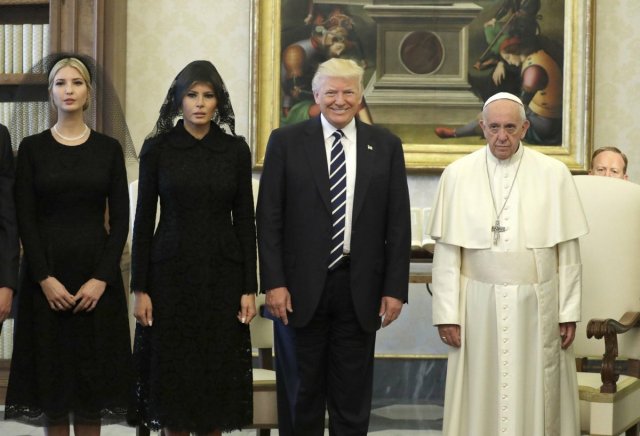
 Thanks to Photoshop and Twitter!
I Spy with my Little Eye…
Posted in Uncategorized
Comments Off on I Spy with my Little Eye…
The Art of the Steal: Trump’s “deal” with the Saudis
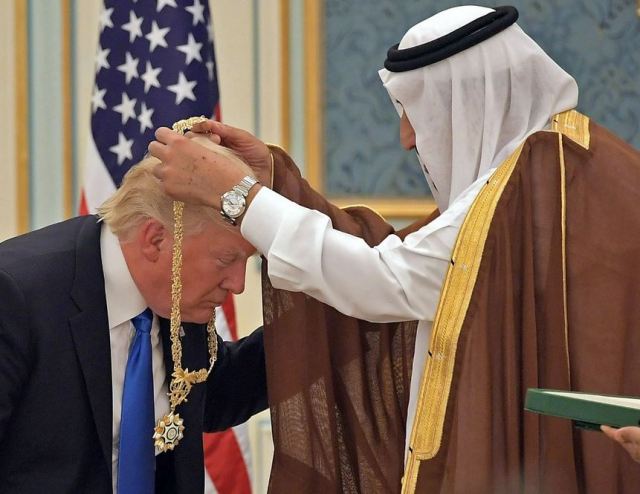 It looks like President “Art of the Deal” Trump got hornswoggled by the Saudis. He agreed to sell them $110 billion of advanced weapons in return for – wait for it – nothing. What a deal! Or as our President himself might put it in one of his early A.M. Twitter rampages: Sad! Fail!
So what goodies are the Saudis getting? 133 M1A2 tanks, one of the most sophisticated tanks in the world. 48 CH-47F Chinook cargo helicopters, along with 112 Lycoming T55-GA-714A engines that the Chinooks use, and 58 AN/AAR-57 Common Missile Warning Systems. This is the U.S. Army’s only heavy-lift cargo helicopter supporting combat and other critical operations. The Terminal High Altitude Area Defense, or THAAD, one of the most advanced missile defense systems in the world, able to intercept short, medium, and intermediate range ballistic missiles. The deal on this last item was greased when Jared Kushner picked up the phone during a final pre-trip meeting with the Saudis and called Marillyn Hewson, CEO of Lockheed Martin (the company that makes the system), and straight-up asked her if she could give the Saudis a discount. What a deal! At least what a deal for Boeing, Lockheed Martin, Raytheon, and other defense contractors.
We’ve been down this road before. Until the Shah was overthrown the U.S. sold Iran billions and billions of dollars of advanced weaponry. What difference did it make that the Shah’s regime was repressive and autocratic – we had to go all in with Iran for “geopolitical” reasons, to counterbalance our adversary. What could possibly go wrong? Of course we wouldn’t make the same mistake again! Except that Trump in the Middle East is like a goldfish swimming with the sharks. Alliances in the Middle East never change (he seems to think). No way any of our enemies could ever get their hands on some of those fabulous weapons (he seems to think). The Saudis are our permanent really special friends (he seems to think).
Or are they? It’s not difficult to find fault with Iran, but aside from our “permanent” alliance with them are the Saudis that much better? The terrorists responsible for 9/11 did not come from Iran. Osama bin Laden was not an Iranian. ISIS itself hates Iran. The closest thing to an establishment “radical Islam” is Wahhabism, which has been supported and spread throughout the globe as the state policy of Saudi Arabia for over 200 years. A recent article by the British journalist Carlotta Gull details how with Saudi support the moderate brand of Islam in Kosovo is being supplanted by Wahhabism, creating a fertile recruiting ground for ISIS.
Our brilliant deal-making President didn’t even make a peep about the human rights catastrophe unfolding in Yemen, which is facing famine and already has over 50,000 casualties of the conflict between Iranian-backed Houthi rebels and the Saudi backed regime. In fact Trump seemed quite pleased to reverse the U.S. policy of at least paying lip service to human rights, and pointedly omitted any mention of the numerous human rights violations of the Saudi regime including extreme discrimination against women, slavery, anti-Semitism, mistreatment and abuse of foreign workers, and overt repression of religious minorities. Maybe Trump thinks some of this is not so bad…
Good job, Mr President! In return for giving the Saudis exactly what they wanted from us and more, you’ve released them from any obligation to clean up their act and have received precisely nothing in return that commits them to help us in any way. The Saudis must be celebrating “The Art of the Steal”.
Posted in foreign policy, Religion & tolerance, Trump, Uncategorized, war
Tagged arms, islam, israel, muslim, saudi
1 Comment
Zeldin: AHCA Tax Credits but not for Vets
By Robert Wick, published as a letter to the Editor, East Hampton Star on May 25th, 2017
As a veteran myself, I’ve never particularly understood, why being a veteran makes one any more qualified to hold a public office than a non-veteran. Be that as it may, Congressman Zeldin proudly advertises his veteran credentials. So, I was very dismayed by his vote for the recent health bill passed by the House that threatens to strip tax credits from up to seven million veterans. The bill offers all of us tax credits that we can use to buy private insurance, but only if we are not eligible for other low-cost government health care options. So, here’s the catch for the estimated seven million veterans who qualify for VA health care benefits: If they elect not to take VA health care benefits, they would be ineligible for AHCA assistance.
Proponents of the AHCA conceded that the bill threatened veterans with the loss of health care coverage in this way, and so a provision had been inserted to exempt veterans. However, in the final bill, it was removed because its inclusion would have required Senate approval by 60 votes, something they apparently didn’t want to risk, instead of a simple majority. A bit of inside baseball – indeed; but the upshot for veterans is simple – the possible loss of tax credits for up to 7 million veterans, and yet Rep. Zeldin endorsed it. Who is Rep. Zeldin serving with this kind of vote? Certainly, not our veterans.
Posted in AHCA, Health Care, Uncategorized, veterans, Zeldin
Tagged Health Care, tax credits, VA, VA hospitals
1 Comment
Starving Our Children?
By Bruce Colbath, published as a letter to the editor “Backward we will go” in the East Hampton Star May 25th, 2017.
We have already seen the amazing callousness that Mr. Trump and his Republican cronies have shown towards the American people in celebrating their punitive healthcare plan and their budget proposal. Sadly for us, they aren’t through. Another Trump proposal will cut $200 million from the Special Supplemental Nutrition Program for Women, Infants, and Children (WIC). When you cut that much money from something, fewer people are going to be protected – and the losers will be those in the title of the program: women, infants and children.
More than 7.8 million women and children participated in the WIC program in the first three months of the 2016 fiscal year. Children and infants usually make up three-quarters of WIC recipients. Trump’s budget cuts mean that hundreds of thousands of mothers, their children and infants would be unable to receive the food vouchers they qualify for. The reason they “qualify” for them? They do not have enough income to afford enough food to feed those young children and infants.
And backwards we will go. Studies by the Center for Disease Control indicate that the WIC program contributed to a decrease in childhood obesity, which means healthier children. A recent study showed that 34 of 56 WIC State Agencies saw modest decreases in obesity among young children from 2010-2014. The percentage of low-income children (ages 2-4) with obesity enrolled in the Special Supplemental Nutrition Program for Women, Infants, and Children (WIC) decreased from 15.9% in 2010 to 14.5% in 2014.
So in order to give the rich a tax break, build a useless wall and pay for more authoritarian deportation agents, the Washington Republicans will starve little children and their mothers.
The East Hampton Republican Party has promised to bring this same kind of “progress” to our town. Seriously?
Our Town Board knows better than to turn its back on our most vulnerable residents. Earlier this year, it gave the East Hampton Food Pantry a new home — located on the grounds of Town Hall. And, in 2017, the Town awarded a grant to the Eleanor Whitmore Early Childhood Center for $90,000, an increase of $10,000 over last year.
The Democratic slate for the Town Board will continue to deliver socially responsible governance instead of punishing the more vulnerable among us. It is they who deserve your vote this November.
Posted in AHCA, budget, Family Issues, Health Care, Town Board, trumpcare, Uncategorized
Tagged childhood, food pantry, WIC
Comments Off on Starving Our Children?
The Pulse of the Resistance is Just Fine
Yesterday I attended an event featuring former Rep. Tim Bishop. During the Q&A session, I asked him what advice he might have for resistance groups on Long Island. He responded, “don’t let the intensity wane”.
We all know that raw emotions rapidly dissipate. When you are angry it is often a good idea to ”sleep over it” before you mouth off! So perhaps you would expect, or fear, that the outrage at our current government might dissipate too?
But here are the facts:
- the numbers of new resistance groups across our county (and nationwide) continue to grow
- within our own group R&R, the number of participants continues to grow. Nearly every day someone asks to join
- the followers of Facebook groups, like Let’s Visit Lee Zeldin, have grown steadily
- the participation of citizens at rallies and demonstrations remains strong and the number of such events is difficult to keep up with!
- while most of us are fatigued by the daily bombardment with news, I don’t know of anyone who has “given up”, or signed off from email lists, etc.
- the number of views of our blog continues to rise since January 1st, 2017 when it was started:
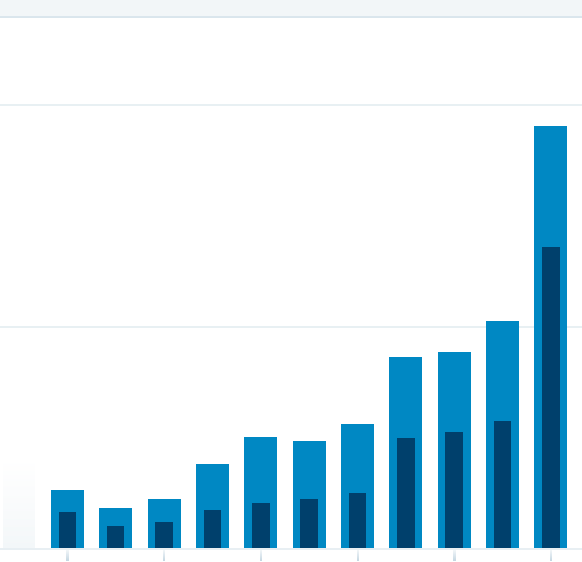
I conclude that the intensity of the resistance is not waning. On the contrary, it seems to be gaining steam.
Why? I guess the answer is obvious. The daily news is hard to ignore. We go to bed angry after watching the latest news about Trump or Zeldin. We wake up and there is even more recent awful news. Our anger is rekindled. It is impossible for the emotions to dissipate!
Yesterday in Montana, the Republican candidate (Gianforte) for Congress assaulted a journalist in front of witnesses and he was charged today with a misdemeanor. That is illegal behavior. Our President has encouraged violence against journalists and demonstrators on numerous occasions. Republicans generally acquiesce and remain silent, rather than condemning such behavior. Hooligans and hoodlums were a feature of NAZI brown shirts in the early 1930’s and this type of violence, including killings, is characteristic of regimes like those of Putin (in Russia), Dutarte (in the Philipines) and Erdogan (in Turkey), all of which are apparent role models for Mr. Trump. Trump and his enablers, including Zeldin, pose an existential threat to our democracy and our freedom. That is why the resistance will not abate.
If you need encouragement watch this great video: TED talk.
Posted in AHCA, Congress, GOP, Politics, Trump, trumpcare, Uncategorized
Tagged assault, crooks, montana, republican, truth, violence
3 Comments
Impacts of Proposed FY 2018 Budget Cuts on State and Local Air Quality Agencies
A Report by the
National Association of Clean Air Agencies (NACAA)
May 22, 2017
Executive Summary
President Trump will release his FY 2018 federal budget on May 23, 2017, which calls for huge cuts in funding for the U.S. Environmental Protection Agency (EPA). According to a document obtained by the National Association of Clean Air Agencies (NACAA),1 the budget will include a 31-percent reduction in EPA’s overall funding (from $8.2 billion in FY 2017 to $5.7 billion in FY 2018), the elimination of many important environmental programs, and – the focus of this report – a 30-percent decrease in federal grants to state and local air pollution control agencies (from $227.8 million in FY 2017 to $159.5 million in FY 2018).
Based on advance information about what the proposed budget would include,2 NACAA surveyed its members to learn what a reduction of approximately 30-percent in federal grants would mean to state and local air quality programs. The results revealed a very disturbing picture: cuts of the magnitude proposed would likely have a devastating impact on the efforts of state and local air pollution control agencies to provide healthful air quality for the American public. Indeed, if cuts of this magnitude are sustained by Congress, we fear more people will die prematurely and get sick unnecessarily.
State and local air quality agencies have faced inadequate funding for years and have already taken many steps to address their budget shortfalls. Additional cuts of 30 percent would severely impede the ability of many agencies to continue essential programs and, in the most extreme cases, some smaller local agencies could conceivably have to close their doors entirely. If such cuts are enacted, many state and local air pollution control agencies will have trouble fully implementing the Clean Air Act’s health-based air quality standards and delivering the clean and healthful air quality that the public deserves.
Additionally, these agencies could be subject to harsh sanctions under the Clean Air Act, including the withholding of millions of dollars in federal highway funds, severe emissions “off-set” limits that could interfere with economic development, and the possibility of EPA imposing Federal Implementation Plans on states.
In their responses, agency after agency painted a similar picture of severe curtailments to their programs in the face of the steep cuts being proposed: loss of staff, cancellation of programs and a diminished capacity to obtain and maintain healthful air quality. Nearly every respondent reported that cuts of this magnitude would severely reduce the benefits the agencies can provide. These include not only to the general public, with respect to decreasing air pollution, maintaining clean air and generally protecting public health, but also to the regulated community, in terms of permitting, compliance assistance and other services.
The respondents provided a long and varied list of ways in which a 30-percent reduction would impact state and local air pollution control programs, affecting nearly every function they perform. State and local agencies identified many activities to be reduced and/or eliminated, including staffing levels, monitoring, inspections, enforcement, permit issuance, compliance assistance, data analysis, equipment maintenance and complaint response, among others.
The impacts of these reductions are far reaching. Numerous agencies reported that they would be operating at a bare minimum level and that the services they provide the public would be limited or even eliminated. Perhaps most importantly, efforts to obtain healthful air quality and maintain clean air would suffer as a result of these resource constraints on their programs.
Agencies also reported that their state or local governments, which already provide the lion’s share of funding for clean air programs, would not be able to make up for the reductions in federal grants through additional state or local appropriations, general funds, grants or other contributions. Additionally, several agencies noted that they could consider increasing fees to address the shortfall, but that gaining approval for additional fees is unlikely as well.
Finally, state and local air quality agencies reported that a 30-percent cut in grants could force them to turn some of their important Clean Air Act implementation work back to the federal government. As local communities, including many regulated entities, generally prefer working with their local and state agencies (as opposed to EPA), the return of responsibilities to the federal government would be a tremendous loss. Additionally, since the proposed budget calls for sharp cuts to EPA’s operating budget as well, the agency would not be in a good position to take on the tasks that the state and local agencies can no longer carry out.
State and Local Air Agencies – In Their Own Words:
“A cut in our federal grant of 30 percent would impose serious and adverse impacts on our individual state and collective ability to effectively run our air pollution control programs. There would very likely be many more people in our state getting sick and possibly dying as a result of these budget cuts.”
“[We are] insufficiently staffed to assure citizens are protected from asbestos. Asbestos is a carcinogen and was widely used in buildings for fireproofing, thermal and acoustical insulation, condensation control, and decoration. Our current staffing of 5 FTEs is only able to inspect 8% of the structures. This inability to verify compliance places the public directly at risk.”
“If you cut back on enforcement programs, such as inspections and compliance assistance, your regulated community tends to be out of compliance more of the time. This can result in increased emissions which affect the health of your citizens.”
“We have been forced to cut programs—sunset Stage 2 vapor recovery, returned delegation of asbestos NESHAP, air toxics, downsized monitoring to federal minimum allowed. Permits are slower, enforcement is down.”
“If there are further reductions in federal funding, there will be a corresponding reduction in services. It is unreasonable to ask States to further supplement their programs with additional State funds.”
“Because we are at the federal minimum for our air monitoring network and unable to fully meet our planning, inventory, and asbestos compliance requirements, a reduction of 31% would be devastating. We clearly would be unable to meet the federally- mandated responsibilities.”
“Our current level of service will be significantly reduced… The level of public health protection currently provided will definitely be reduced to reflect the impacts of the budget cuts.”
“Without question, a cut of 31 percent to the already-reduced funding levels would devastate our program. Under the requested funding reductions, we would be forced to cut our staffing by at least one-third… a reduction in staffing along the proposed lines would significantly delay the issuance of permits for new construction.”
“The state and local funding cuts combined with the proposed 30% federal funding cut will result in about a 72% reduction in [our] overall budget. This will significantly impact [our] ability to be here at all, and if we are still here, it will be at a 60-70% decreased staffing level leaving us with 7-10 FTEs to manage a 6 county area. At this level, we will not be able to meet the core requirements of the state contract and federal grants.
“Enforcement would be reduced to only the most serious cases – Violations may not be detected early because there will be less report reviews, inspections, stack tests, and complaint response.”
“A reduction of federal funds may result in an air quality monitoring network that does not meet federal requirements.”
“These cuts ignore reality; because we still have to meet all the existing federal requirements, even the ones the new administration doesn’t like. When we fail, due to a lack of resources, it will be local taxpayers who bear the burden of paying environmental groups’ legal fees.”
“We’d no longer do any air toxics work.”
Who is NACAA?
The National Association of Clean Air Agencies (NACAA) is a national, non- partisan, non-profit association of state and local air pollution control agencies in 45 states, the District of Columbia and four territories. The air quality professionals in its member agencies have vast experience dedicated to improving air quality in the United States.
State and local air pollution control agencies (e.g., NACAA members) have primary responsibility for implementing our nation’s air pollution control laws and regulations. The associations serve to encourage the exchange of information and experience among air pollution control officials; enhance communication and cooperation among federal, state and local regulatory agencies; and facilitate air pollution control activities that will result in clean, healthful air across the country.
NACAA’s headquarters office is located in Washington, DC. For further information, including contact information for state and local air quality agencies, visit NACAA’s web site at http://www.4cleanair.org or call (202) 624-7864.
1 http://www.4cleanair.org/sites/default/files/Documents/EPA_FY18_Budget.pdf
2 On March 21, 2017, information regarding the Administration’s proposed FY 2018 budget for the U.S. Environmental Protection Agency (EPA) was released. While it did not include all the details of the proposal, it indicated that state and local grants under Sections 103 and 105 of the Clean Air Act would be reduced by 31 percent. The memorandum is available here: http://www.4cleanair.org/sites/default/files/Documents/EP A_Memo_FY_2018_Budget_March_21_2017.p df
A copy of the complete NACAA report can be found at: http://www.4cleanair.org/sites/default/files/Documents/NACAAFundingReport-FY2018.pdf
Posted in Air Pollution, budget, Environment, EPA, Trump
1 Comment
“Drain the Swamp?” — Please
President Trump signed an executive order in late January — echoing language first endorsed by Mr. Obama — ostensibly prohibiting lobbyists and lawyers hired as political appointees from working for two years on “particular” government matters that involved their former clients. In the case of former lobbyists, they could not work on the same regulatory issues they had been involved in. He very publicly touted this as a headline initiative to “drain the swamp.”
Mr. Trump reserved the right to issue waivers to this ban. Mr. Obama made any such waivers public. The exceptions were typically granted for people with special skills, or when the overlap between the new federal work and a prior job was minor. Mr. Trump offers no such transparency.
Ethics watchdogs, as well as Democrats in Congress, have expressed concern at the number of former lobbyists taking high-ranking political jobs in the Trump administration. In many cases, they appear to be working on the exact topics they had previously handled on behalf of private-sector clients — including oil and gas companies and Wall Street banks — as recently as January.
The Office of Government Ethics, through its head Walter Shaub, issued requests to each federal agency asking each to identify the specifics of each waiver granted. The White House, in a letter from OMB chief Mick Mulvaney, has stepped in to block the disclosure of this information. A senior OGE executive said she had never heard of a move by any previous White House to block a request like Mr. Shaub’s. She recalled how the Bush White House had intervened with a federal agency during her tenure to get information that she needed.
Mr. Shaub returned a scalding, 10-page response to the White House late Monday, unlike just about any correspondence in the history of the office. “O.G.E. declines your request to suspend its ethics inquiry and reiterates its expectation that agencies will fully comply with its directive,” Mr. Shaub wrote in a letter he also sent to every federal agency ethics officer and certain members of Congress. “Public confidence in the integrity of government decision making demands no less.”
Here is a link to Mr. Shaub’s letter. https://www.nytimes.com/interactive/2017/05/22/us/politics/document-OMB-Director-Mulvaney-Letter-to-Office-of.html
Posted in Ethics, Executive Order, Trump
1 Comment
Trump’s Budget from Hell
This is a budget from hell. Increases for defense and the wall that will ultimately raise the total expenditures, despite the ill-advised cuts. So, Mr. Zeldin, are you going to say something now, or tow the party line?
Trump wants to cut billions from the departments that regulate drugs, stop infections, and research cancer
Business Insider, By Rebecca Robbins, May 22, 2017
U.S. President Donald Trump listens to a question during a joint news conference with Colombia’s President Juan Manuel Santos (not pictured) at the White House in Washington, U.S. Kevin Lamarque/Reuters The Trump administration’s proposed budget for 2018 would make sweeping cuts to Medicaid as well as to the agencies and programs that propel the nation’s engines of science and biomedical research. The administration released a “skinny budget” in March that included sharp proposed cuts to Read the full story
Cruelty Wrapped in a Lie
Donald Trump will embrace hardline right-wing economics on Tuesday with a budget that proposes swingeing cuts to social safety net programmes while allocating $1.6bn to a border wall.
Millions of people would lose access to Medicaid, the government insurance programme for the poorest and many disabled Americans. Food stamps for people on low incomes would be cut over the next 10 years under the White House plan and the families of undocumented workers would be frozen out of key tax breaks.
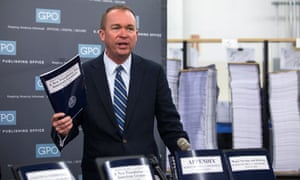
“We are no longer going to measure compassion by the number of programmes or the number of people on those programmes,” budget director Mick Mulvaney told reporters. “We’re going to measure compassion and success by the number of people we help get off of those programmes to get back in charge of their own lives. We’re not going to measure our success by how much money we spend but by how many people we actually help.”
The Trump blueprint is unlikely to become law because it will face opposition from both moderate Republicans and Democrats worried about its social impact and from fiscal conservatives who fear it will increase the deficit.
Chuck Schumer, Democratic minority leader in the Senate, condemned the proposed cuts to Medicaid. “This would pull the rug out from so many Americans who need help: those suffering from opioid and heroin addiction, people in nursing homes and their families who care for them, the elderly, the disabled, and children,” he said on the Senate floor.
Medicaid helps not only the poor but increasingly the middle class, as well as 1.75m veterans, Schumer added. “Here’s what candidate Trump said when he campaigned: ‘I’m not going to cut social security like every other Republican and I’m not going to cut Medicare or Medicaid.’ He promised he would help take care of those suffering from opioid addiction. If it cuts Medicaid, he’s breaking that promise right in half.
Economic experts were also quick to dismiss Mulvaney’s claims that Trump’s tax plans and budget would boost economic growth to 3%, balancing the federal budget within a decade.
Although Trump is an unconventional president, the budget shares much with the conservative orthodoxy of Ronald Reagan and Margaret Thatcher. It is entitled “A New Foundation for American Greatness” and Mulvaney said if he had a subtitle it would be, “The taxpayer first budget”.
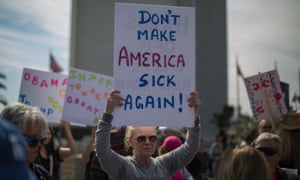
Cuts to Medicaid over the next decade exceed even the more than the $800bn reductions contained in a health bill passed by the House of Representativesearlier this month.
The president also aims to slash welfare by $274bn over a decade, including $193bn on food stamps, driving millions of people off the programme. This would be several times bigger than cuts attempted by House Republicans in the past. The number of people claiming food stamps spiked to 47m people at the height of the 2007-08 recession and had not come down as expected, still totalling 44m people, Mulvaney said, despite near full employment in the US.
Some $72bn over 10 years would come from social security’s disability insurance programme, including $50bn in savings which would be achieved by helping recipients get off the programme and find a job.
He added: “There’s a dignity to work and there’s a necessity to work to help the country and succeed and we need everybody to pull in the same direction.”
The Child Tax Credit and the Earned Income Credit would be limited to those who are authorised to work in the US. They would be required to show proof of a social security number – a move that would have a negative impact on children who are US citizens but whose parents are undocumented.
“I could ask you for your money I think, in good faith and good conscience, and say, ‘Look, I need to take some of your money and give it to this family, who deserves the Child Tax Credit, but I can’t do it to give the Earned Income Tax Credit, which is designed to help folks who work, to give it somebody who’s in the country and working illegally. It’s just not fair. It’s not right when you look at it through the perspective of the people paying the taxes.”
Trump would also reduce federal employee pensions and farm subsidies while keeping campaign pledges to leave core Medicare and social security benefits for the elderly untouched.
He also promised a “groundbreaking” proposal to provide six weeks of paid family leave to new mothers and fathers, including adoptive parents, championed by Trump’s daughter, Ivanka, and costing $25bn over 10 years.
Mulvaney confirmed that the budget plan defunds Planned Parenthood, on the premise that the American Health Care Act will become law, and “winds down” the support for the Corporation for Public Broadcasting, which feeds the money to outlets such as the Public Broadcasting Service and National Public Radio.
The blueprint also shaves 31.4% off funding for the Environmental Protection Agency and 29.1% off that for the state department and other international programmes.
The cuts to domestic spending would be redirected to the US military, law enforcement and supporting veterans. It allocates $2.6bn to border security, including $1.6bn for the “bricks and mortar construction” of a wall on the Mexican border, with the remaining $1m allotted to “technology and infrastructure”.
But the plan – a wish list to fund the Trump agenda – faces numerous hurdles. The healthcare bill is likely to undergo significant changes in the Senate while a rewrite of the tax code only has a broad outline so far. It also makes assumptions about growth.
Mulvaney said Trump’s package of spending cuts and tax breaks would boost the US’s economy’s growth rate to 3% over the next decade, a considerable increase from the 1.9% forecast under current policy by the Congressional Budget Office.
The director, due to testify to the House and Senate this week, said: “I think what Trumponomics is – and what this budget is a part of – is an effort to get to sustained 3% economic growth in this country again. I think it’s sad that the previous administration was willing to admit that we couldn’t get better than 1.9% growth over the next 10 years … That assumes a pessimism about America, about the economy, about its people, about its culture that we’re simply refusing to accept. We believe that we can get to 3% growth.”
But economists were skeptical of the claim. Gus Faucher, PNC Financial Services’ chief economist said US productivity growth had averaged 1.75% over the last 45 years and that the period between the late 1990s and early 2000s when growth topped 3% was the exception. “It’s asking a lot to expect the exception not the rule,” said Faucher.
Marc Goldwein, head of policy at non-partisan thinktank Committee for a Responsible Federal Budget said the budget’s numbers did not add up. He said Mulvaney’s promise of returning to the 3% growth rates were “unrealistic at best”.
“We are not bringing the ‘90s back,” he said. “Three percent was normal then because the baby boomers were in their prime and we had a tech boom.” Now baby boomers are aging out of the workforce and the tech boom’s impact has fizzled, Trump’s budget would likely add “decimal points not percentage points” to US growth, he said.
“This is like pretending you have won the lottery when all you have is a handful of scratch cards,” he said.
Posted in budget, Medicaid, Tax Reform, Trump
Comments Off on Cruelty Wrapped in a Lie
Australians have “better health care than we do”!
Letter to the Editor of the East Hampton Star. May 18, 2017, by Peggy Backman
In a recent op-ed in an online newsletter, congressman Zeldin tries to answer what he calls lies about the work-in-progress Trumpcare. However, he fails to mention that many of the problems he sees in the current Affordable Care Act (or Obmamacare) are the result of compromises the Democrats had to make with the Republicans and their lobbyists. Now they talk about these imperfections as if they in the Republican-heavy Congress had nothing to do with their enactment.
To rebut criticisms of the Republican’s sorry offer of healthcare reform, we have Zeldin’s misleading simplistic answers in his op-ed piece: For example, Mr. Zeldin says not to worry and mentions pre-existing conditions being protected in New York State. ‘Tis true and lucky us. But what about our fellow countrymen and women, who are not so fortunate as to live in a progressive blue state like New York, where state laws for many years have given state residents protection for pre-existing conditions?
The vast majority of Americans are not protected by progressive state laws, such as those in New York. But under Obamacare they now have these protections for pre-existing conditions—thanks Obama et al. However, the complicated scheme the Republicans are proposing, diminishes such protections. Why take away these protections (just because they came into being under a Democratic administration)? That is small-minded and too stressful for the people affected. We need to think about all of our countrymen and women: what helps all citizens, helps us all. Leave Obamacare alone. Strengthen it, but don’t repeal it.
And how does Zeldin think we will pay for his insurance plan with all the tax-breaks-for-the-rich that are in the so-called new bill? Giving more money to the zillionaires only makes their bank accounts swell; that game has been tried before and failed to help the rest of us. I say let’s chuck this Republican Trumpcare Act-Of-Despair and provide the American people with a single payer insurance, i.e., Medicare-for-all. Even Mr. Trump admitted recently to Australia’s Prime Minister that, with their universal healthcare system, Australians have “better health care than we do”. Mr. Trump actually said that! And I must mention that the scam that is now being offered to the American public does not measure up at all to what other countries have. Is that our American exceptionalism? God help us.
Posted in AHCA, Trump, trumpcare, Uncategorized, Zeldin
Tagged australia, healthcare, single payor, universal
Comments Off on Australians have “better health care than we do”!