On May 11, President Trump formed a commission on “election integrity” to investigate voter fraud and voter suppression in the United States. The executive order follows repeated, unsubstantiated claims from the president that millions of people voted illegally in the 2016 presidential election.
There are immediate red flags that the public needs to be aware of: namely the complete lack of evidence that would justify this use of taxpayer resources and the record of the official tapped to lead it.
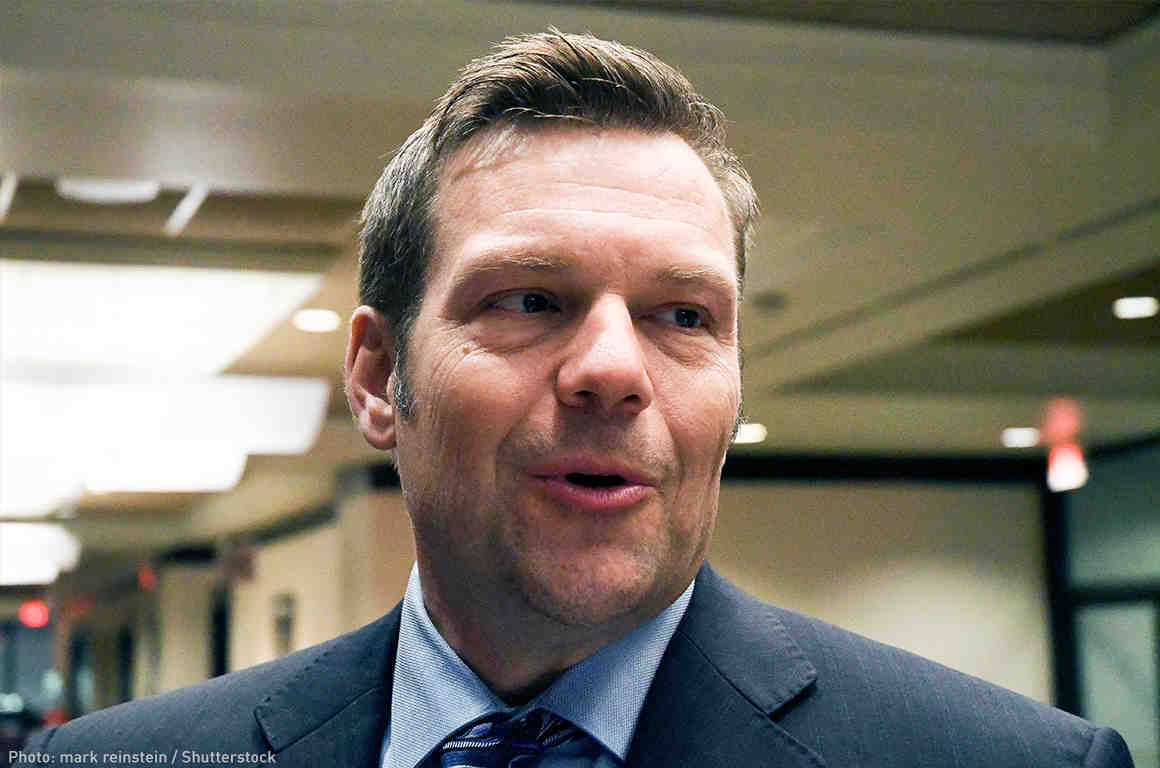
Kris Kobach, Kansas secretary of state and vice-chair of the Presidential Advisory Committee on Election Integrity is a known voter suppressor. He has been brought to court — and lost — several times for suppressing the constitutional rights of citizens to vote in Kansas.
Voting is the cornerstone of our democracy and the fundamental right upon which all our civil liberties rest. Americans deserve a champion who will fight to protect and expand voting rights, not suppress them. Kris Kobach is not that person and here are the top reasons why:
Kris Kobach has wreaked havoc on voting rights in Kansas.
In September 2016, the U.S. Court of Appeals for the 10th Circuit, in a unanimous opinion by Judge Jerome Holmes, an appointee of George W. Bush, found that Kobach had engaged in “mass denial of a fundamental right” by blocking 18,000 motor voter applicants from registering to vote in Kansas. The ACLU’s Voting Rights Project has sued him four times, and Kobach lost all four cases in 2016.
Kris Kobach says that there are lots of non-citizens voting. He just can’t produce any evidence. But don’t just take our word for it, hear it from the courts:
In October 2016, the U.S. Court of Appeals for the 10th Circuit described Kobach’s theory of Kansas’ widespread problem of noncitizens voting as “pure speculation.”
In September 2016, the U.S. Court of Appeals for the D.C. Circuit said that Kobach had “precious little record evidence” of noncitizen voting.
Kobach is the chief architect of the Interstate Voter Registration Crosscheck program, a notoriously flawed system which Kobach admits generates “a significant number” of “false positives” when trying to find people registered to vote in more than one state. A recent study found that Crosscheck “would eliminate about 200 registrations used to cast legitimate votes for every one registration used to cast a double vote.” And according to The Washington Post, Kobach “examined 84 million votes cast in 22 states to look for duplicate registrants. In the end 14 cases were referred for prosecution, representing 0.00000017 percent of the votes cast.”
Kobach has a secret voting plan. He showed it to Donald Trump but doesn’t want the public to see it. Last November, Kobach was notoriously photographed carrying documents into a meeting with then-President-Elect Trump, which appeared to reference a proposal to change the federal motor-voter law. The ACLU sought those documents in connection with litigation against Kobach over his office’s violations of the motor-voter law, but Kobach’s lawyers denied they even existed.
In April 2017, U.S. Magistrate James O’Hara blasted Kobach for engaging in “word-play meant to present a materially inaccurate picture of the documents,” and ordered Kobach to turn them over. The ACLU has now received those documents, but Kobach continues to claim that they are “confidential” and cannot be shared with the media or the general public.
Kris Kobach isn’t just a threat to voting rights.
Kobach co-authored S.B. 1070, Arizona’s infamous racial profiling law from 2010, which required local law enforcement to demand the papers of anyone they suspected of being in the country illegally. The law prompted a nationwide outcry and economic boycott, and the ACLU fought it in the courts for years. The Supreme Court and the lower courts either blocked or drastically limited all of its major provisions. The anti-immigrant bill gave rise to several copycat bills in other states, including Alabama’s HB56 — which Kobach also helped to draft. The ACLU and allies defeated those laws in the courts as well, exposing the fact that Kobach’s legislation was built on a foundation of legal error.
In 2010, Kobach assisted in drafting a bill, designed to end the constitutional guarantee of birthright citizenship for any child born in the United States. That bill was too extreme to gain any traction even among the legislatures that had adopted Kobach’s reprehensible racial profiling laws.
Kobach serves as counsel to the Immigration Law Reform Institute, the legal arm of the Federation for American Immigration Reform, which the Southern Poverty Law Center has listed as a hate group since 2007. SPLC has written extensively about Kobach’s role in advancing a nativist agenda.
In 2012, Kobach compared homosexuality to drug abuse and polygamy. During his failed 2004 congressional campaign, he accused LGBTQ+-rights groups like the Human Rights Campaign of promoting “homosexual pedophilia.”
This spreadsheet is intended as a resource for letter writers, op-ed writers, those who want to ask well-informed questions at town hall meetings and mobile office hours, candidates and their staffers who want to develop winning campaign positions, and, last but not least, all members of the LVLZ community who care deeply about our environment.
Sources and Updating
This spreadsheet relies heavily on information and analysis provided free to the public by the League of Conservation Voters (LCV) at LCV’s “National Environmental Scorecard” website[1]. We will update this spreadsheet regularly to reflect new votes in Congress.
Format – Cover Page and Chronological Summary
The cover page of the spreadsheet includes a table showing Zeldin’s National Environmental Scorecard scores:
2015 — 14%
2016 — 8%
Lifetime – 11%
This means that Zeldin voted AGAINST THE ENVIRONMENT on 86% of the pertinent House roll call votes in 2015, AGAINST THE ENVIRONMENT on 92% in 2016, and AGAINST THE ENVIRONMENT on 89% for his first term overall!!!
The cover page also shows the number of Zeldin’s pro-environment and anti-environment votes in the new session of Congress that began in January 2017. As of June 29, 2017 Zeldin had voted AGAINST THE ENVIRONMENT on all 12 of the pertinent House roll call votes.
The second page of this spreadsheet is a chronological listing of all of Zeldin’s environment-related votes in Congress, from oldest to newest. This listing identifies the type of issue at stake in each vote and is color-coded to show whether Zeldin’s vote was pro-environment or anti-environment.
Format – How the Votes are Organized
In this spreadsheet, Zeldin’s votes on bills that impact the environment are divided into 11 categories of issues, each with its own tab:
1. Air Quality
2. Clean Energy
3. Climate Change
4. Dirty Energy
5. Drilling
6. Lands/Forests
7. Oceans
8. Other (e.g. public access)
9. Toxins
10. Water
11.Wildlife
Within each issue tab, the votes are listed individually by date (oldest to newest). Each entry identifies the roll call number of the vote, the LCV name for the vote, the formal name of the vote in the House, whether Zeldin’s vote was pro-environment or anti-environment, the importance of the vote for New York’s 1st Congressional District (high, medium, low), key words to aid in searches and the LCV’s one-paragraph description of the background, purpose and significance of the vote.
Two Ways to Search this Spreadsheet
In addition to being searchable by issue, this spreadsheet is searchable by keyword.
Conclusion
We hope you will find this spreadsheet informative and helpful. Use it wisely and well!
Why has the appeal of populist ideas grown in western countries? Is this a temporary phenomenon? In the wake of Brexit and the election of Donald Trump, the collapse in support for established political parties in France and the rise of the Five Star Movement in Italy, not to mention the surge of authoritarian populism in central and eastern Europe, these are important questions.
What, first of all, is a populist? The abiding characteristic of populism is its division of the world into a virtuous people on the one hand, and corrupt elites and threatening outsiders on the other. Populists distrust institutions, especially those that constrain the “will of the people”, such as courts, independent media, the bureaucracy and fiscal or monetary rules. Populists reject credentialed experts. They are also suspicious of free markets and free trade. Rightwing populists believe certain ethnicities are “the people” and identify foreigners as the enemy. They are economic nationalists and support traditional social values. Often they put their trust in charismatic leaders. Leftwing populists identify workers as “the people” and the rich as the enemy. They also believe in state ownership of property. Why have these sets of ideas become more potent? Ronald Inglehart of the university of Michigan and Pippa Norris of Harvard Kennedy School argue that the reaction of older and less educated white men against cultural change, including immigration, better explains the rise of populism than economic insecurity.
This is part of the truth but not the whole truth. Economic and cultural
phenomena are interrelated. This study considers immigration a cultural shift.
Yet it can also be reasonably viewed as an economic one. More important, the
study does not ask what has changed recently. The answer is the financial crisis
and consequent economic shocks. These not only had huge costs. They also
damaged confidence in — and so the legitimacy of — financial and
policymaking elites. These emperors turned out to be naked.
This, I suggest, is why Mr Trump is US president and the British chose
Brexit. Cultural change and the economic decline of the working classes increased disaffection. But the financial crisis opened the door to a populist surge.
To assess this, I have put together indicators of longer-term economic change
and the crisis, for the G7 leading economies, plus Spain. The longer-term
indicators include the loss of manufacturing jobs, the globalisation of supply
chains, immigration, inequality, unemployment and labour force participation.
The indicators of post-crisis developments include unemployment, fiscal
austerity, real incomes per head and private sector credit (see charts).
The four most adversely affected of these economies in the long term were (in
order) Italy, Spain, the UK and US. Post-crisis, the most adversely affected
were Spain, the US, Italy and the UK. Germany was the least affected by the
crisis, with Canada and Japan close to it.
It is not surprising, then, that Canada, Germany and Japan have been largely
immune to the post-crisis surge in populism, while the US, UK, Italy and Spain
have been less so, though the latter two have contained it relatively
successfully.
Thus the rise of populism is understandable. But it is also dangerous, often even for its supporters. As a recent report from the European Economic Advisory Group notes, populism may lead to grossly irresponsible policies. The impact of Hugo Chávez on Venezuela is a sobering example. At worst, it may destroy independent institutions, undermine civil peace, promote xenophobia and lead to dictatorship. Stable democracy is incompatible with a belief that fellow citizens are “enemies of the people”. We must recognize and address the anger that causes populism. But populism is an enemy of good government and even of democracy.
We can tell ourselves a comforting story about the future. The political
turmoil being experienced in a number of large western democracies is in part
another legacy of the financial crisis. As economies recover and the shock
dwindles, the rage and despair it caused may also fade. As time passes, trust
may return to institutions essential to the functioning of democracies, such as
legislatures, bureaucracies, courts, the press and even politicians. Bankers
might even find themselves popular.
Yet this optimism runs into two big obstacles. The first is that the results of
past political follies have still to unfold. The divorce of the UK from the EU
remains a process with unfathomable results. So, too, is the election of
President Trump. The end of US leadership is a potentially devastating event.
The second is that some of the long-term sources of fragility, cultural and
economic, including high inequality and low labour force participation of
prime-aged workers in the US, are still with us today. Similarly, the pressures
for sustained high immigration continue. Not least, the fiscal pressures from
ageing are also likely to increase. For all these reasons, the wave of populist
anger is only too likely to be sustained.
If so, those who wish to resist the rising tide of populism have to confront its simplifications and lies, as Emmanuel Macron did in France. As he understands, they must also directly address the worries that explain it. Cultural anxieties are relatively immune to policy, except over immigration. Butthe economic anxieties can and must be addressed. Of course, politicians canalso do the opposite. That is what is happening in the US. That will not end thepopulist surgebut promote it. This is, no doubt, their intention.
Note: the italics and bold text are mine! Addressing economic anxieties is paramount. We would do well to remember this. D Posnett
Tester and Senate Veterans Affairs’ Committee Members Highlight Impact of Senate Health Care Plan on Veterans
Approximately 7 Million Veterans’ Health Care at Risk
Tuesday, June 27, 2017
(U.S. Senate) – Ranking Member of the Senate Veterans’ Affairs Committee Jon Tester and Senators Patty Murray, Richard Blumenthal, Joe Manchin, and Sherrod Brown today highlighted the negative impacts of the controversial Senate health care plan on the nation’s veterans.
Approximately 7 million veterans choose to receive their health care outside of the Department of Veterans Affairs (VA). Since the implementation of the Affordable Care Act, the number of uninsured veterans has dropped by nearly 40 percent.
“This plan, written in secret, will devastate thousands of elderly, disabled and rural veterans who go outside of the VA for all or some of their health care,” said Tester. “This plan guts Medicaid which provides life-saving treatment, mental health care and access to a health care provider for thousands of folks who have bravely served this nation. I will be working hard to make sure that any health care law honors our promises to our veterans, but this plan doesn’t even come close.”
“Our country makes a promise to take care of the men and women who serve, but Trumpcare would do just the opposite,” Murray said.“Hundreds of thousands of veterans in Washington state, not to mention countless military families, could see their costs increase or lose their Medicaid coverage if Republicans jam this bill through, which is why I am fighting it every step of the way.”
“Senate Republicans are recklessly gambling with veterans’ healthcare,” said Blumenthal. “If this bill passes, millions of the men and women who put their lives on the line for this country will lose access to care, including at least 18,000 Connecticut veterans. Every Member of Congress who plans to support this bill needs to imagine looking a veteran in the eye and telling them why their mental healthcare for PTS has been halted, or why they can no longer afford treatment for traumatic brain injury sustained while serving their country.”
“More than 50 percent of our Veterans in West Virginia seek healthcare outside of the VA system. Our Veterans and their families don’t deserve to have their healthcare ripped away from them or to have their out-of-pocket costs skyrocket after they have bravely sacrificed for their country,” Manchin said. “The Republican healthcare bill will raise costs on the 80,000 West Virginia Veterans who are older than 65 and on the 85,000 West Virginia Veterans who live in rural communities. Moreover, with less care available in our community hospitals, the Veterans Health Administration expects to see an uptick in enrollees, which will overwhelm their already overburdened resources. This bill does not reflect our obligation and promise to our Veterans and their families to take care of them when they get home and it is one of the many reasons I cannot support it.”
“The last thing we ought to be doing is making it harder for these men and women who have sacrificed so much for our country to get the care they need,” said Brown. “When returning home, they should be able to focus on spending time with loved ones and rejoining their communities, not worrying about how they’ll afford healthcare.”
After 13 Republican Senators drafted the so-called Better Care Reconciliation Act behind closed doors, they finally released the legislation to the public just days before forcing a Senate vote.
The potential impacts of the Senate health care plan on veterans nationwide include:
Nearly 1.75 million disabled and low-income veterans could lose Medicaid coverage.
Approximately 600,000 veterans face a tax that could charge them up to 5 times more for health insurance.
Over 5 million rural veterans could face difficulty in accessing vital services at their rural hospitals.
Up to 20 percent of veterans who have served in Iraq and Afghanistan and up to 30 percent of Vietnam veterans who have Post Traumatic Stress could be charged more for mental health care.
Up to 7 million veterans could lose tax credits that help them afford health care. Many of these veterans are not eligible to enroll in VA health care.
Approximately 7 percent of veterans could lose access to care for opioid or other substance abuse disorders.
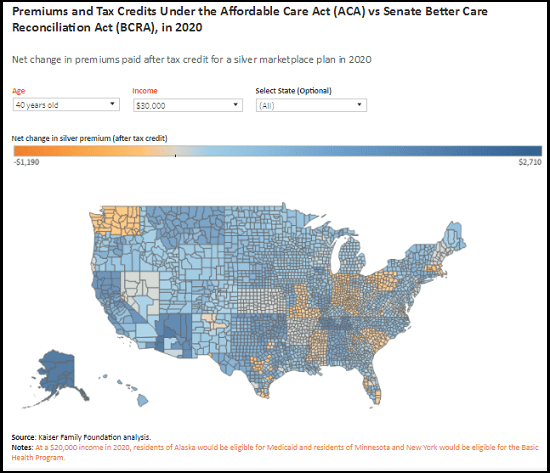
A new interactive map from the Kaiser Family Foundation compares county-level estimates of premiums that consumers would pay under the Affordable Care Act (ACA) in 2020 with what they’d pay under the Senate’s discussion draft, Better Care Reconciliation Act (BCRA), a replacement plan unveiled last Thursday.
The maps include premium and tax credit estimates by county for current ACA marketplace enrollees at age 27, 40, or 60 with an annual income of $20,000, $30,000, $40,000, $50,000, $60,000, $75,000, $100,000, or 351 percent of the federal poverty level (which is just above the cutoff for tax credits under the BCRA). The map includes estimates for premiums, tax credits, and premiums after tax credits, for bronze and silver marketplace plans in each county in 2020.
Both the ACA and the Senate’s bill include tax credits to help consumers pay premiums for individual insurance. Both take into account family income, local cost of insurance, and age in calculating tax credits; however, they differ in how they determine the percentage of income an individual must pay toward their premium. The ACA and Senate bill also base tax credits on different benchmark plans, with the Senate bill tying the credits to plans with higher cost sharing for consumers.
Also new from the Foundation: a detailed summaryof the Senate’s new discussion draft, the Better Care Reconciliation Act, a plan released Thursday to repeal and replace the Affordable Care Act (ACA). Users can compare the Senate bill to current law and the House-passed American Health Care Act in 17 key areas of health policy, including Medicaid, premium subsidies to individuals, state role, financing, women’s health, and individual health insurance market rules.
Donald Trump and his Republican cohorts are trying to convince their voter base that the Senate healthcare bill does not cut Medicaid spending. Nothing could be further from the truth, as The Washington Post explains.
There’s a reason that President Trump and his allies have tried their best to claim that the Better Care Reconciliation Act — the Senate GOP health-care bill introduced earlier this month — doesn’t cut funding from Medicaid. A poll released by Suffolk University this week shows that more than 80 percent of Americans say it’s very or somewhat important that low-income people maintain their Medicaid coverage under any health-care bill. Nearly three-quarters of Republicans agreed.
So we end up with arguments like the one, from Trump on Twitter Wednesday afternoon, that the BCRA isn’t a cut to Medicaid, Trump says, because the amount spent on Medicaid would keep going up!
That line of argument hinges on two points. First, that you don’t consider a reduction in future spending to be a cut. And, second, that you don’t include inflation.
The Congressional Budget Office, which provided the numbers for Trump’s graph (see the red line in the graph below), compiles long-term budget projections that we can use to try to replicate Trump’s argument. (The CBO is also the nonpartisan organization that assessed the effects of the proposed BCRA, including that 22 million fewer people would have insurance by 2026 if the bill passed.)
Where the spending cut comes in is how the BCRA spending looks compared to what’s currently planned. Yes, the CBO figures that Medicaid spending will continue to rise, but under the current law (the Affordable Care Act, better known as Obamacare), that spending would rise more. In other words, the future spending has been cut.
On the graph below, that difference is depicted with diagonal lines. That area is the cut in spending.
But, again, that’s in nominal dollars — the actual dollars spent each year. Since a dollar in 1960 was worth more than a dollar in 2010, we can adjust everything into 2016 dollars (using conversion tables from the University of Oregon). When we do that, the increase in spending under the BCRA essentially vanishes.
Why? Because spending $400 billion in 2016 probably gets you more than spending it in 2026. (It depends on what happens with the dollar over the next decade, but this is generally a fair assumption.)
On Thursday, the CBO released an addendum to its initial analysis, at the request of the ranking Democratic senators. That additional analysis includes an estimate of Medicaid spending past the 10-year window that the CBO usually looks at. Because the GOP Senate bill would change how Medicaid is funded past that window, the cuts would worsen from 2027 on. (We looked at this earlier.)
In the first 10 years, Medicaid funding would drop 26 percent from the CBO’s projected baseline. In the 10 years after that, 35 percent.
This new analysis puts a fine point on it. The Senate health-care bill cuts Medicaid spending. End of story.
For Republicans, the trick now becomes selling that to skeptical voters.
After President Trump spent part of his Thursday morning attacking MSNBC host Mika Brzezinski, his wife, Melania, defended the actions despite stating during the campaign that she would make the fight against cyberbullying her priority as first lady.
President Trump called Brzezinski “low IQ” and said he refused her entry to a New Year’s Eve party when she was bleeding from a face-lift.
“As First Lady has stated publicly…when her husband gets attacked, he will punch back 10 times harder,” Melania’s communications director said in regards to the latest online insults hurled by the president.
Melania Trump’s stance is a departure from her attitude during the campaign, when she focused on children but noted the overall dangers of online attacks. She specifically singled out people who criticize “looks or intelligence.”
“Technology has changed our universe. But like anything that is powerful, it can have a bad side,” she said during a rare speaking appearance at a November rally. “We have seen these already. As adults, many of us are able to handle mean words, even lies. Children and teenagers can be fragile. They are hurt when they are made fun of or made to feel less in looks or intelligence. This makes their life hard and can force them to hide and retreat. Our culture has gotten too mean and too rough, especially to children and teenagers. It is never OK when a 12-year-old girl or boy is mocked, bullied, or attacked. It is terrible when that happens on the playground. And it is absolutely unacceptable when it is done by someone with no name hiding on the Internet.”
We have to find a better way to talk to each other, to disagree with each other, to respect each other,” she continued. “We must find better ways to honor and support the basic goodness of our children, especially in social media. It will be one of the main focuses of my work if I’m privileged enough to become your first lady.”
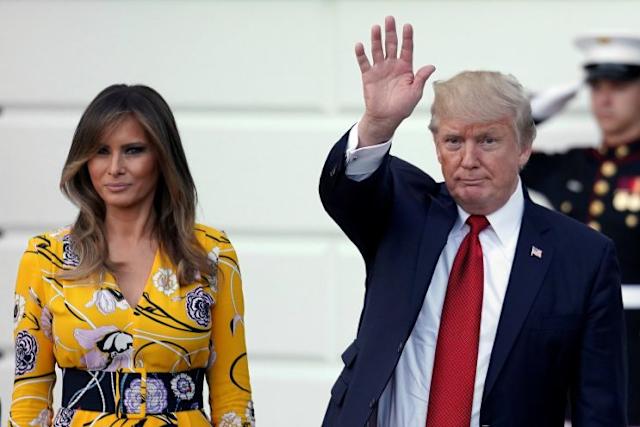
Melania Trump and President Trump (Photo: Carlos Barria/Reuters)
The disconnect between Melania Trump’s promise and her husband’s campaign tactics were quickly noted. Lady Gaga, the pop star and antibullying advocate, tweeted at her, saying, “to say u will stand for ‘anti-bullying’ is hypocrisy. Your husband is 1 of the most notorious bullies we have ever witnessed.”
And through five months of a Trump White House, there has been no movement on Melania’s program as the president continues to use his platform to attack everyone from his predecessor to a union leader in Indianapolis to Snoop Dogg.
“Mrs. Trump is being very thoughtful when it comes to building out her initiatives,” said spokesperson Stephanie Grisham in a May statement to USA Today, adding that she values “quality over quantity” in assembling her staff.
According to that story, “It’s still not clear exactly what initiative Melania Trump will make her platform — during the campaign, she said she would use the role of first lady to speak out against cyberbullying. But that initiative has since been cast aside, another White House official said.”
It went on to say, “Her spokeswoman, Stephanie Grisham, claimed Melania Trump is still passionate about the issue, even though she has yet to highlight it in any public appearance. ‘While cyber-bullying is something she speaks out against, that is but one subset of her focus around the overall wellness of children,’ Grisham said in an email.”
The first lady has not mentioned bullying of any kind since taking office and has not outlined any other planned proposals.
Hey GOP, Trump’s Misogyny and Obsession With Revenge Are Nothing New
Republicans who looked past his earlier behavior shouldn’t complain now.
DAVID CORN JUN. 29, 2017 1:24 PM
Chuck Burden/ZUMA
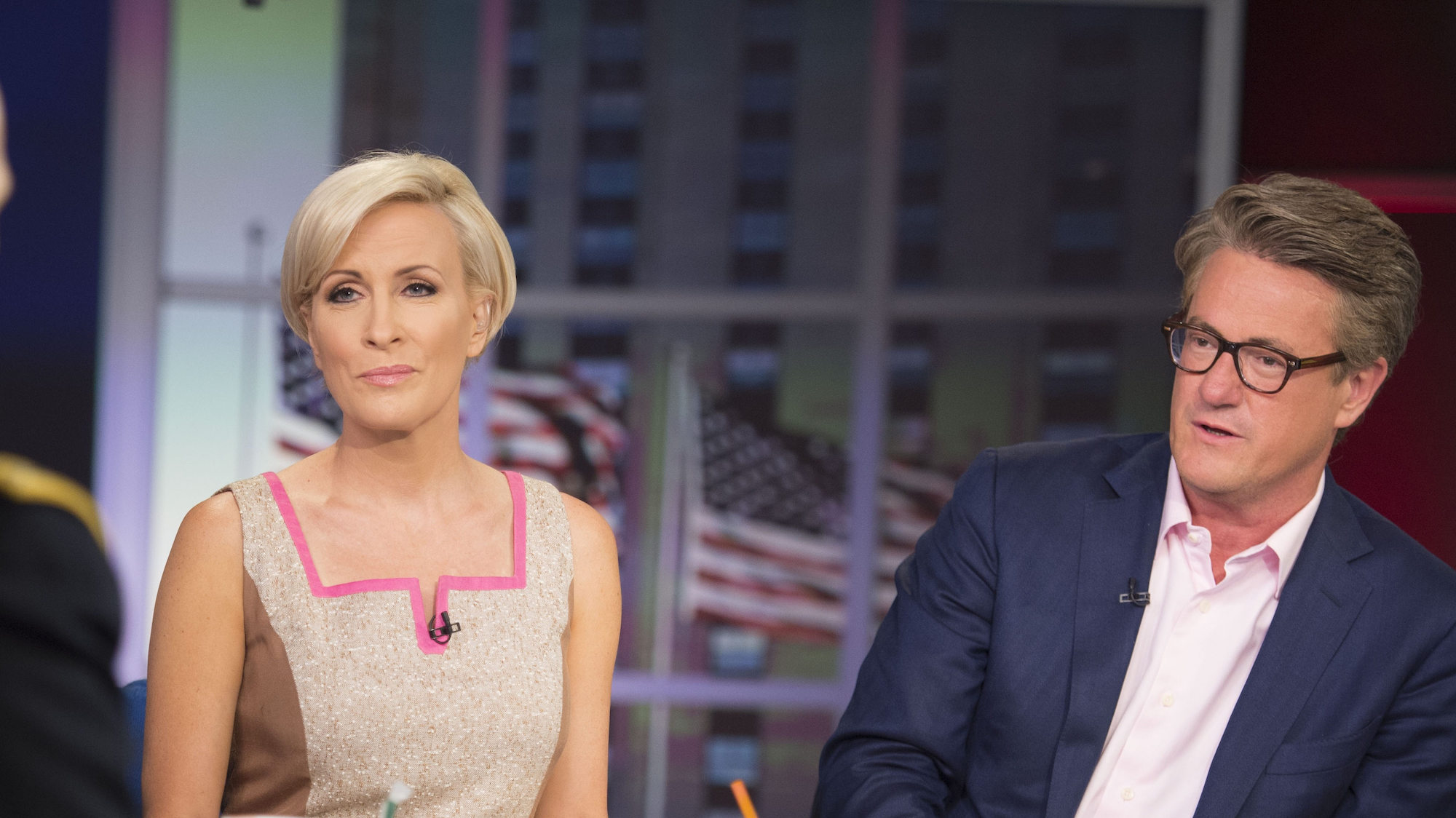
It was no shock that Donald Trump set the political media world ablaze on Thursday morning when he tweet-blasted MSNBC morning co-hosts Joe Scarborough and Mika Brzezinski as “psycho” and “crazy,” focusing his fire on “low I.Q.” Brzezinski and claiming she had been “bleeding badly” from plastic surgery during a visit to his ritzy Mar-a-Lago estate. On cue, the indignation poured forth, with Republicans wringing their hands. GOP Senator Ben Sasse tweeted, “Please just stop. This isn’t normal and it’s beneath the dignity of your office.” His colleague Lindsey Graham bemoaned, “Mr. President, your tweet was beneath the office and represents what is wrong with American politics, not the greatness of America.” House Speaker Paul Ryan remarked, “Obviously, I don’t see that as an appropriate comment.”
But Trump was not acting in an exceptional manner; he was combining two of the driving forces of his personality, both of which were well documented before he was elected: misogyny and revenge. In fact, he was just following his personal code of conduct—as Melania Trump’s response to this tweetstorm made clear.
Reacting to a question about Trump’s extreme tweets, a spokeswoman for the first lady noted, “When her husband gets attacked, he will punch back 10 times harder.” This was Trump’s wife echoing one of Trump’s favorite mottos. As Mother Jonesreported in October, Trump has a long history of touting his love of revenge, and for years in speeches and public talks he has declared that a key to success is vengeance: “Get even with people. If they screw you, screw them back 10 times as hard. I really believe it.”
In fact, this was a catchphrase he deployed repeatedly when giving paid addresses on how to become rich and famous like him. In a 2007 speech, he explained his first rule of business:
It’s called “Get Even.” Get even. This isn’t your typical business speech. Get even. What this is a real business speech. You know in all fairness to Wharton, I love ’em, but they teach you some stuff that’s a lot of bullshit. When you’re in business, you get even with people that screw you. And you screw them 15 times harder. And the reason is, the reason is, the reason is, not only, not only, because of the person that you’re after, but other people watch what’s happening. Other people see you or see you or see and they see how you react.
Sometimes Trump said you should screw people back 10 times as much as they screwed you, sometimes he said 15 times. Melania Trump has adopted the more moderate position. But the point was always the same: Worship revenge. Trump once exclaimed, “I really believe in trashing your enemies.” And he summed up this lifelong philosophy in a 2013 tweet: “’Always get even. When you are in business, you need to get even with people who screw you.’—Think Big.” The following year, he tweeted this quote: “‘Revenge is sweet and not fattening.’—Alfred Hitchcock.”
Of course, the other constant in Trump’s life is his fondness for degrading women. His feud with actor Rosie O’Donnell is famous; he called her a “pig” and a “degenerate.” He has often derided women as “dogs.” In March 2016, I chronicled a long list of Trump’s misogyny eruptions. He once said Jennifer Lopez could not be on a list of the most beautiful women because her backside was too big. He noted that women were attracted to men who treated them badly. (“It’s sick, isn’t it?”) When radio shock jock Howard Stern asked him if he would still love Melania if she were disfigured in a horrible car accident, Trump replied, “How do the breasts look?” Other news outlets published similar lists of his boorish assertions. (See here and here.) In public, he bragged that he hired a woman just because she was “hot.” During the campaign, he claimed he had mocked women’s looks only “for the purpose of entertainment.” (One of Hillary Clinton’s best zingers of the campaign: “Donald looks at the Statue of Liberty and sees a 4….Maybe a 5, if she loses the torch and tablet and changes her hair.”)
Throughout the 2016 campaign, Trump repeatedly displayed his penchant for mixing misogyny with get-even wrath. He assailed Alicia Machado, the onetime Miss Universe whom he had previously fat-shamed. He derided Fox News host Megyn Kelly, who had dared to ask him about his history of sexist remarks, as a “bimbo” and referred to her blood as well. He attacked Carly Fiorina for her appearance. Much of his lock-her-up campaign against Clinton was laced with sexism. Oh yeah, and there was also that video of Trump bragging about committing sexual assault.
Trump certainly did not hide his misogyny or his obsession with revenge. He couldn’t. He placed both front and center during the campaign. (Some Trump associates have noted that his primary reason for running for president was revenge: to get back at President Barack Obama for having mocked him so effectively at the 2011 White House Correspondents Association Dinner.) As a candidate, Trump presided over a crusade fueled by hate. So it’s bit late for any Republican or pundit who did not declare Trump’s earlier behavior unacceptable to complain now or register surprise.
Responding to Trump’s anti-Joe-and-Mika tweets, Sen. James Lankford (R-Okla.) said, “The President’s tweets today don’t help our political or national discourse and it does not provide a positive role model for our national dialogue.” The same could be said for much of Trump’s presidential campaign, and yet Republicans supported him and thereby enabled his loathsome conduct. By backing Trump and overlooking his bigotry and profound flaws, they taught him—and the entire nation—this lesson: Misogyny and revenge indeed can work. That is, there is no need for this dog to learn any new tricks. His old ones work just fine.
nb. This data will be made public, including Social Security numbers, if state databases contain it. Privacy? Who cares in the face of .000004% voter fraud? Identity theft? Not Kris Kobach’s problem. Where is the leadership in this administration?
A commission created by President Donald Trump to enhance confidence in America’s elections has asked all 50 states for copies of their voter records which often include names, addresses and ages. The commission has said it intends to make the information widely available.
People cast their ballots in the 2016 presidential election at Freedom Academy Elementary School on November 8, 2016, in Provo, Utah. (George Frey/Getty Images)
On Wednesday, all 50 states were sent letters from Kris Kobach — vice chair for the Presidential Advisory Commission on Election Integrity — requesting information on voter fraud, election security and copies of every state’s voter roll data.
The letter asked state officials to deliver the data within two weeks, and says that all information turned over to the commission will be made public. The letter does not explain what the commission plans to do with voter roll data, which often includes the names, ages and addresses of registered voters. The commission also asked for information beyond what is typically contained in voter registration records, including Social Security numbers and military status, if the state election databases contain it.
President Donald Trump established the commission through an executive order on March 11. Its stated goal is to “promote fair and honest Federal elections” and it is chaired by Vice President Mike Pence. The commission plans to present a report to Trump that identifies vulnerabilities in the voting system that could lead to fraud and makes recommendations for enhancing voters’ confidence in election integrity. No deadline has been set for completion of the work.
A number of experts, as well as at least one state official, reacted with a mix of alarm and bafflement. Some saw political motivations behind the requests, while others said making such information public would create a national voter registration list, a move that could create new election problems.
“You’d think there would want to be a lot of thought behind security and access protocols for a national voter file, before you up and created one,” said Justin Levitt, a professor at Loyola University School of Law and former Department of Justice civil rights official. “This is asking to create a national voter file in two weeks.”
David Becker, the executive director of the Center for Election Innovation & Research, also expressed serious concerns about the request. “It’s probably a good idea not to make publicly available the name, address and military status of the people who are serving our armed forces to anyone who requests it,” he said.
Kobach, the secretary of state in Kansas, has been concerned about voter fraud for years. His signature piece of legislation was a law requiring Kansans to show proof of citizenship when they register to vote, which is currently ensnarled in a fraught court battle with the American Civil Liberties Union. He has written that he believes people vote twice with “alarming regularity,” and also that non-citizens frequently vote. Multiple studies have shown neither happens with any consistency.
Kobach also runs the Interstate Voter Registration Crosscheck Program, a proprietary piece of software started by Kansas Secretary of State Ron Thornburgh in 2005. Under the program, 30 states pool their voter information and attempt to identify people who are registered in more than one state.
Some expect the information Kobach has requested will be used to create a national system that would include data from all 50 states.
It is not uncommon for voters to be registered in more than one state. Many members of Trump’s inner circle — including his son-in-law Jared Kushner and daughter Tiffany Trump — were registered to vote in two states. Given the frequency with which voters move across state lines and re-register, the act of holding two registrations is not in itself fraud. There is no evidence to suggest that voting twice is a widespread problem, though experts say removing duplicate registrations are a good practice if done carefully.
“In theory, I don’t think we have a problem with that as an idea, but the devil is always in the details,” said Dale Ho, the director of the ACLU’s Voting Rights Project. While he believes voter registration list maintenance is important, he says Kobach’s Crosscheck program has been repeatedly shown to be ineffective and to produce false matches. A study by a group of political scientists at Stanford published earlier this year found that Crosscheck highlighted 200 false matches for every one true double vote.
“I have every reason to think that given the shoddy work that Mr. Kobach has done in this area in the past that this is going to be yet another boondoggle and a propaganda tool that tries to inflate the problem of double registration beyond what it actually is,” Ho said.
Some experts already see sloppy work in this request. On at least one occasion, the commission directed the letter to the incorrect entity. In North Carolina, it addressed and sent the letter to Secretary of State Elaine Marshall, who has no authority over elections or the voter rolls. In that state, the North Carolina Board of Elections manages both.
Charles Stewart, a professor at MIT and expert in election administration, said it was proof of “sloppy staff work,” and questioned the speed at which the letter was sent. “It seems to me that the data aren’t going anywhere. Doing database matching is hard work, and you need to plan it out carefully,” he said. “It’s a naïve first undertaking by the commission, and reflects that the commission may be getting ahead of itself.”
Connecticut Secretary of State Denise Merrill, who oversees voting in the state, said she was dismayed about the commission’s failure to be clearer about what its intentions are. In a statement, Merrill said her office would share publicly available information with the commission. But she said that “in the same spirit of transparency” her office would request the commission “share any memos, meeting minutes or additional information as state officials have not been told precisely what the Commission is looking for.”
“This lack of openness is all the more concerning, considering that the Vice Chair of the Commission, Kris Kobach, has a lengthy record of illegally disenfranchising eligible voters in Kansas,” she wrote.
Alabama’s Republican Secretary of State John Merrill (no relation) also indicated he had questions for Kobach regarding how much of the data would be made public and how Alabamans’ privacy would be protected, even while he expressed support for the commission. “Kobach is a close friend, and I have full confidence in him and his ability, but before we turn over data of this magnitude to anybody we’re going to make sure our questions are answered,” he said.
Colorado Secretary of State Republican Wayne Williams, for his part, said he was not concerned with what the commission planned to do with the data. “Just like when we get a [public-records] request, we don’t demand to know what they are going to do with the data,” he said. “There are important reasons why the voter roll is publicly available information.”
The extent to which voter roll data is public varies across the country. While some states, like North Carolina, make their voter rolls available for free download, other states charge high fees. Alabama, for example, charges one cent per voter in the roll for a total cost of more than $30,000. The state law provides a waiver for government entities, so Merrill said the commission would receive the data for free. Other states, like Virginia, do not make this information public beyond sharing it with formal campaigns and political candidates. When ProPublica tried to purchase Illinois’ voter roll, our request was denied because they only release it to government entities for privacy reasons. Illinois did not respond to a request regarding whether they would release this information to the PCEI, which — while a government entity — intends to make the information public.
The letter from the commission also asks quite broad questions of state elections officials.
“What changes, if any, to federal election laws would you recommend to enhance the integrity of federal elections?” asks the first question. The letter also asked for all information and convictions related to any instance of voter fraud or registration fraud, and it solicited recommendations “for preventing voter intimidation or disenfranchisement.”
“The equivalent is, ‘Hey, doctors, what changes would you suggest regarding healthcare? Let us know in two weeks,’” said Levitt, the Loyola professor. “If I were a state election official, I wouldn’t know what to do with this.”
While the commission is being chaired by Vice President Mike Pence, Kobach signed the letter alone. Jon Greenbaum, chief counsel for the Lawyers’ Committee for Civil Rights Under Law, said this is an indication that Kobach — not Pence — “will be running the show,” which he said should be a point of concern.
“As we know with Kobach, he’s obsessed with trying to identify voter fraud and finds it in a lot of places where it doesn’t exist,” he said.
Vanita Gupta, the former acting head of the Department of Justice’s civil rights division under President Barack Obama, said the commission’s letter was an indication the commission was “laying the groundwork” to carry out changes to the National Voter Registration Act that might seek to restrict access to the polls.
The National Voter Registration Act — sometimes called the Motor Voter Act — was enacted in 1993. It allows the DOJ the authority to ensure states to keep voter registration lists, or voter rolls, accurate and up-to-date. It also requires states to offer opportunities for voter registration at all offices that provide public assistance (like the DMV).
In November, Kobach was photographed holding a paper addressing national security issues and proposing changes to the voter registration law. It is not clear what these changes were. The ACLU is involved in a lawsuit against Kansas’ state law requiring people to show proof of citizenship in order to register to vote. As part of the suit, ACLU lawyers requested access to the document reflecting the changes Kobach proposed.
Originally Kobach told the court the document was beyond the scope of the lawsuit, but last week the court found the documents were relevant and that Kobach had intentionally misled the court. He was fined $1,000 for the offense and required him to turn the document over. It has not yet been made public.
Gupta said her concern about the future of the voter registration act was deepened by the fact that, on Thursday, the DOJ sent a letter to the 44 states covered by the act requesting information on the maintenance of their voter rolls. States were given 30 days to answer a set of detailed questions about their policies for list maintenance.
“The timing of the letters being issued on the same day is curious at the very least,” she said.
The White House and the DOJ all did not respond to requests for comment about the letters.
The letter did not ask about compliance with the portions of the act that require states to attempt to expand the voter base, such as by offering voter registration forms and information in public offices.
Danielle Lang, deputy director of voting rights for The Campaign Legal Center, said the focus on list maintenance troubled her. While she said this might point to a new direction in enforcement for the DOJ’s voting rights section, it was too early to tell how this information might be used.
Levitt said he did not recall a time when the DOJ has previously requested such broad information. While the information is public and not, on its face, troubling, Levitt said the only time he recalled requesting similar information was during targeted investigations when federal officials suspected a state was not complying with the law.
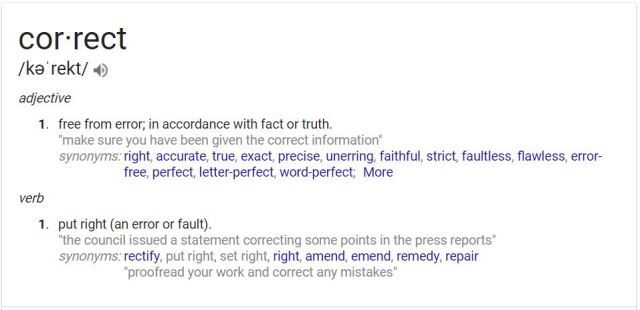
Here’s the thing about folks who rail against the “Politically Correct.” Being politically correct is exactly that: being correct, or on the right side of a fact-based, or morally superior argument.
It is politically correct to be against racism and misogyny. It is politically correct to be against a government that is owned by corporate interests. It is politically correct to be against gerrymandering and voter suppression. It is politically correct to want to elevate the poor and the struggling so they can live with a little dignity. It is politically correct to want to invest in the best education we possibly can for our children. It is politically correct to understand that science is our friend.
To be politically correct is to stand by your principles and be willing to engage with opposing views using rational thought, logical inference and facts, an admittedly difficult thing to do in today’s environment of “alternative facts,” media bashing and claims of “fake news” from the anti-intellectuals on the far right, and yes, the far left.
People who don’t like “political correctness” are simply uninterested in facing facts. More importantly, they are demonstrating lack of empathy. They mock political correctness with smug condescension and expect that everyone will simply buy the bullshit they are selling. It is simply another way to package anti-intellectualism into bite-sized morsels that the ignorant can devour while feeling superior.
People who object to political correctness are really saying “I’m tired of having to defend my offensive beliefs and I don’t care about the people those beliefs offend.”
I’m happy to be politically correct. How about you?